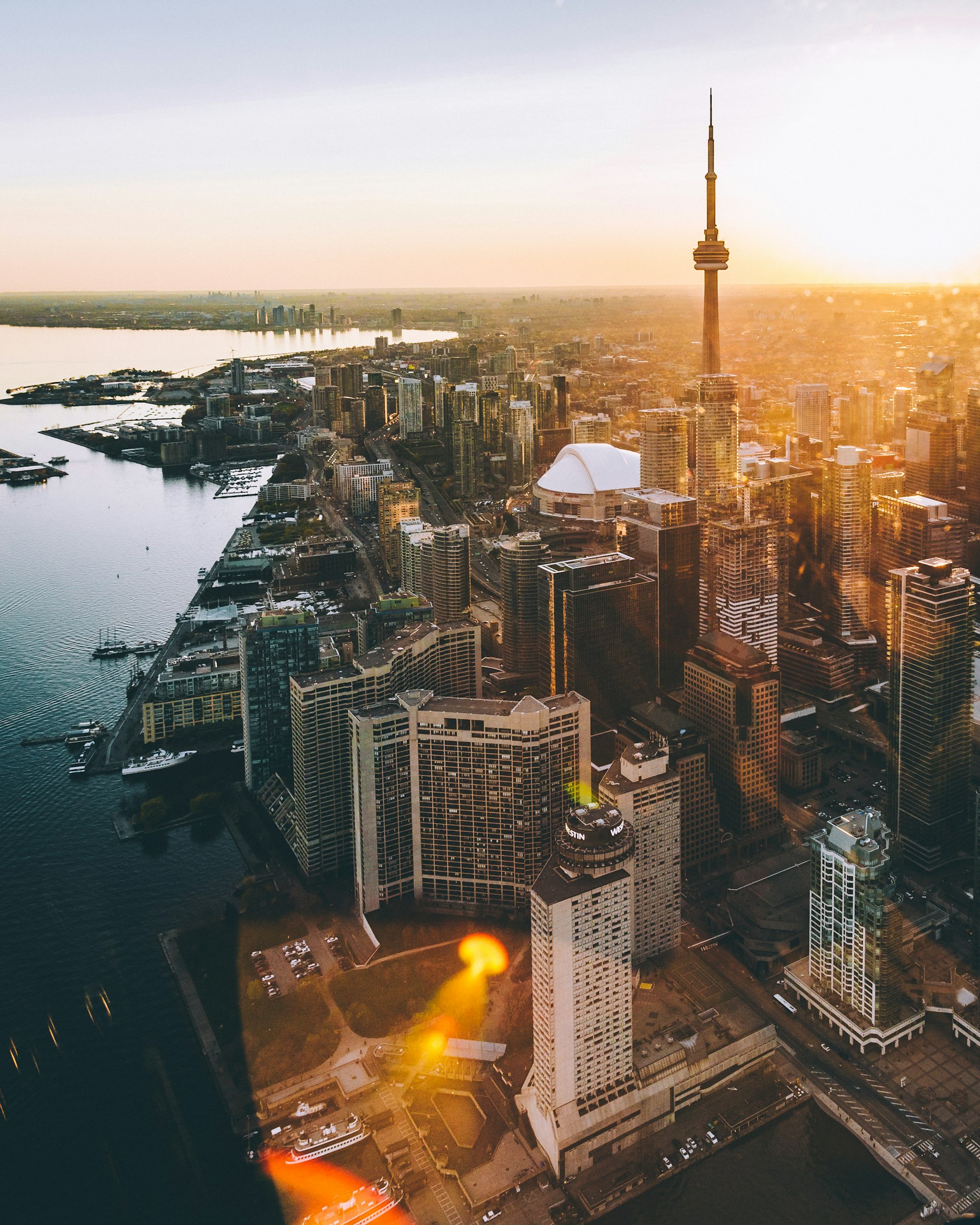
Alberta — Rockies, Ranches and Oilfields
Capital: Edmonton · Population: approximately 4.8 million · Joined Confederation: 1905
Alberta spent most of the 20th century as a ranching-and-farming province with a reputation for blue skies and conservative politics. Oil changed everything in the 1940s, and then again in the 1970s and 2000s. Today the province has a per-capita GDP higher than any Canadian peer, a fiscal regime built around resource revenues, a tech sector rapidly growing in Calgary, and a population that's younger than the national average (the median Albertan is about 37 years old).
For visitors, the province divides neatly into three. The mountains — Banff, Lake Louise, Jasper, Waterton — are what most international tourists come for. The cities — Calgary in the south, Edmonton in the central belt — are where most Albertans actually live. The prairie — the area east of Highway 2, the dinosaur badlands, the small grain-elevator towns — is the part almost no one sees, and it's where a lot of the province's character actually is.
A Compact History
Cree, Blackfoot, Tsuut'ina, Stoney Nakoda and Métis peoples have been on this land for thousands of years. The Hudson's Bay Company fur trade brought Europeans in the late 1700s. The territory was part of Rupert's Land until 1870, then the North-West Territories, and finally became its own province in 1905 alongside Saskatchewan.
The first oil boom came at Leduc in 1947, when the Leduc No. 1 well struck what turned out to be a very large oilfield. The oil sands of northern Alberta — around Fort McMurray — have been exploited commercially since 1967. The province has gone through several boom-bust cycles since then, most recently a sharp downturn in 2015-2016 that reshaped Calgary in particular.
Calgary

Calgary is Alberta's largest city, a metropolitan area of about 1.67 million people at the point where the prairie meets the foothills of the Rockies. It sits at an elevation of about 1,045 metres, which is higher than Denver — a fact that explains, among other things, why the air is drier and the sunsets are more dramatic than on the flat prairie.
Is Calgary just cowboys and oil?
That's the stereotype and it's not completely wrong. The Calgary Stampede every July is a huge civic event (more than 1.2 million attendees) and the energy sector is still the largest private employer. But Calgary has diversified significantly since 2015. Tech companies (Shopify's Canadian engineering hub, RBC Ventures, various fintechs) have moved in, film and television production is growing, and the city's population is younger and more international than many people expect. About 32 percent of Calgarians are foreign-born, roughly comparable to Montreal.
What neighbourhoods are worth exploring?
Downtown Calgary has a distinctive street life. The +15 Skywalk — a network of elevated indoor walkways — connects more than 100 buildings across 18 kilometres, which is useful in January when it's -25°C outside. Kensington, across the Bow River from downtown, is the walkable shopping-and-restaurant neighbourhood. Inglewood, east of downtown along 9 Avenue SE, is the oldest part of the city and has been slowly gentrifying for twenty years. Mission, along 4 Street SW, is the patio district.
Outside downtown, Bridgeland (Italian-Ukrainian-turned-hipster), Ramsay (artsy and industrial) and Bowness (west-end river neighbourhood) are worth exploring. Further out, Fish Creek Provincial Park in the south is one of the largest urban parks in North America.
Is Calgary expensive?
Less than Toronto or Vancouver; more than Edmonton. A one-bedroom apartment downtown runs CAD $1,600 to $2,000 in early 2026. The benchmark detached house is around CAD $700,000. No provincial sales tax means your grocery and retail bills are a couple of percent lower than in most other provinces.
What's the weather really like?
Unpredictable. Chinook winds can lift the temperature by 20°C in a few hours in the middle of winter; it's not unusual to have a January day above 10°C followed by a January day below -20°C. Summer is dry, sunny, and comfortably warm (daily highs around 23°C in July). Snow can fall any month of the year; in 2019 Calgary had snow on the first week of September and again in mid-May.
What are the Rockies from Calgary like?
Close. Banff is a 90-minute drive west on the Trans-Canada Highway. Kananaskis Country is 45 minutes. You can leave downtown at 6 a.m., be at Lake Louise by 9, hike for four hours, and be back in Calgary for dinner. Very few large cities in the world have mountains of that calibre that close.
Edmonton

Edmonton is the provincial capital, a metropolitan area of about 1.5 million in the geographic centre of Alberta. It sits on the North Saskatchewan River, much of it along a spectacular river valley that is one of the largest urban parks in North America (larger, by area, than Central Park, Stanley Park and Vondelpark combined).
How is Edmonton different from Calgary?
Edmontonians will tell you their city has a culture Calgary doesn't. Edmonton has the provincial government, the University of Alberta, the legislature, the Fringe Festival (the largest and longest-running fringe theatre festival in North America), and more publicly subsidized arts institutions than Calgary. It's also colder in winter (further north, no Chinook effect), flatter, and has a smaller skyline. Calgary is the corporate headquarters city; Edmonton is the government-and-arts city.
Is West Edmonton Mall actually worth visiting?
It was the largest shopping mall in the world from 1981 to 2004 and it's still North America's largest. It has a water park, an indoor ice rink, an amusement park, a replica of Santa Maria in a lake, and somewhere around 800 stores. It's a genuinely strange place. If you have a half-day and you like kitsch-on-an-epic-scale, go. If you hate malls, skip.
What else should I do in Edmonton?
Walk the river valley. Go to the Muttart Conservatory (four glass pyramids full of different climate biomes, very photogenic). Take a tour of the Alberta Legislature. Eat on 124 Street or in Old Strathcona, the neighbourhood around Whyte Avenue across the river. If you're there in August, the Fringe Festival is the city at its best.
Banff & Lake Louise

Banff is a town of about 8,300 people inside Banff National Park, Canada's oldest national park (1885). Lake Louise is a hamlet of about 1,000 people 55 kilometres further north. Between them they host about 4 million visitors a year.
When's the best time to visit Banff?
Depends what you want. Late June through mid-September is the peak: hiking trails clear of snow, wildflowers out, long daylight hours. Expect crowds, especially at Lake Louise and Moraine Lake. October can be beautiful (larches turn gold in the last two weeks of September into the first of October) but snow can arrive any time. Winter (late November to early April) is quieter in town, busy at the ski resorts (Sunshine Village, Lake Louise Ski Resort, Mount Norquay). May and November are proper shoulder seasons — cheap hotels, limited activities, not much colour.
Is Moraine Lake really closed to cars?
Yes, since 2023. You can only reach it by Parks Canada shuttle bus, by Roam transit bus, by commercial bus tour, on foot (14 km), or by bike. Book the shuttle in advance — in peak season it sells out weeks ahead. Lake Louise still has a parking lot but it fills by 7 a.m. in summer; use the Park & Ride at the Lake Louise Ski Resort.
How much does Banff cost?
A lot. A decent hotel room in Banff town in July runs CAD $400-$800 a night. The Fairmont Banff Springs, the famous castle-like hotel, is upwards of CAD $700 even in shoulder season. Camping is dramatically cheaper (CAD $30-$50 per site) but reservations open five months ahead and sell out in minutes for the best sites. A national park pass is CAD $11 per adult per day or $75 per year for a family.
Is Banff worth it given the crowds?
Yes, if you're willing to walk. The parking lots and the town and the lakeshore viewpoints are crowded. The moment you get two kilometres up a trail, you're essentially alone. A hike to Lake Agnes Tea House from Lake Louise, or to Helen Lake off the Icefields Parkway, will show you what the park actually is.
Jasper
Jasper is Banff's quieter, larger, northern sibling. Jasper National Park is actually bigger than Banff (10,878 km² versus 6,641), the town is smaller (about 4,700 people), and the wildlife is easier to find. Elk and bighorn sheep wander the edge of the town; wolves and grizzly bears are genuinely present in the backcountry.
Is Jasper still recoverable after the 2024 wildfire?
The 2024 Jasper wildfire burned through the townsite in late July, destroying roughly a third of the buildings. Rebuilding has been ongoing since late 2024 and the town is partially operational but not fully; check the current status before booking. The surrounding park, Maligne Canyon, the Columbia Icefield and the Icefields Parkway are largely unaffected and worth the trip.
How do I get to Jasper?
Drive. Jasper is about 4 hours from Edmonton and 4 hours from Banff via the Icefields Parkway. VIA Rail's Canadian transcontinental train passes through Jasper three times a week and is the most scenic way to arrive if you have the time. There is no major airport in Jasper itself.
Lethbridge & Southern Alberta
Lethbridge, population about 105,000, is the largest city in southern Alberta, 215 km south of Calgary. It's a coulee city (the Oldman River has carved deep ravines through it), a university town, and the traditional service centre for the surrounding ranching country. Just east is the dinosaur country of the Red Deer River badlands and the town of Drumheller, home to the Royal Tyrrell Museum — one of the best paleontology museums in the world. The Canadian Rockies get most of the attention, but the badlands are arguably Alberta's strangest landscape, and the Tyrrell is worth a detour on any trip between Calgary and Saskatoon.
Further south, Waterton Lakes National Park sits on the Montana border and is the quieter, shorter, prettier cousin of Banff. Fewer visitors, smaller lakes, more wildflowers. An overlooked corner of the province that's worth two or three days if you have them.
Fort McMurray & the Oil Sands
Fort McMurray sits in northern Alberta on the Athabasca River, population about 68,000 at the 2021 census (down from a 2013 peak of 76,000 after the 2016 wildfire and the oil-price crash). It's the centre of the oil sands industry — bitumen mining and in-situ extraction that produces most of the crude oil Canada exports to the United States. For almost all visitors, Fort McMurray is not a destination; it's the place the oil comes from, and a subject of ongoing environmental and political debate.
Alberta FAQs
Does Alberta really have no sales tax?
No provincial sales tax, correct. You still pay the 5 percent federal GST on most things. It's the only province in Canada without a PST or HST. A shopping day in Calgary costs meaningfully less than the same day in Toronto — 8 percent less, if the goods were taxable.
What's a Chinook?
A warm, dry wind that comes over the Rockies from the Pacific in winter. It can raise temperatures in Calgary by 15 to 25°C in a few hours. A classic Chinook morning: -20°C at dawn, +8°C by lunch. The price is headaches — Chinooks are widely blamed for migraines — and rapid snowmelt.
Do I need a car to see Alberta?
If you want to see the Rockies, yes. There are shuttle services from Calgary and Edmonton airports to Banff and Jasper (Brewster, SunDog, Banff Airporter) but they're expensive and inflexible. Renting a car in Calgary gives you access to the best of Banff, Kananaskis, the Icefields Parkway and Jasper over a five-to-seven-day trip. Outside the mountains, the cities themselves have decent transit.
What time zone is Alberta in?
Mountain Time (UTC-7 in winter, UTC-6 in summer with daylight saving). Same as Saskatchewan in winter, but different in summer because Saskatchewan doesn't observe DST. Two hours behind Toronto in winter and summer.
Is the Calgary Stampede worth it?
If you're the kind of person who enjoys big civic festivals, yes. It's ten days of rodeo, chuckwagon racing, midway rides, concerts, and a collective agreement to wear Western wear. If you hate crowds and country music, no. Book accommodation six months ahead if you want to go — Stampede week is the busiest hotel week of the year in Calgary.
Can I see the Northern Lights in Alberta?
Sometimes. Northern Alberta (Fort McMurray, Peace River, High Level) sees auroras dozens of nights a year. Edmonton and Calgary catch them a handful of times a winter during strong geomagnetic storms. For reliable viewing, go to Yellowknife in the Northwest Territories instead.
Education & Post-Secondary Institutions
Alberta is home to a strong network of universities, colleges, and polytechnic institutes, anchored by world-class research universities in Edmonton and Calgary and a robust system of technical and community colleges across the province.
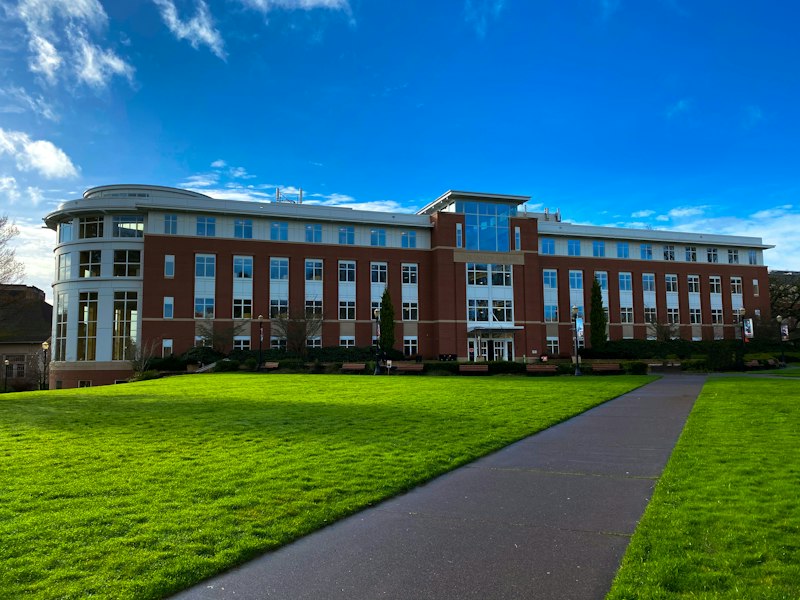
University of Alberta
One of Canada's top five research universities, renowned for its Faculty of Medicine & Dentistry, engineering programs, artificial intelligence research (part of the Alberta Machine Intelligence Institute), and one of the largest law schools in Canada. The U of A consistently ranks in the top 100 universities worldwide.
University of Calgary
A leading research university with particular strengths in energy and environmental science, veterinary medicine, law, and the Schulich School of Engineering. The Haskayne School of Business is one of Canada's most respected. UCalgary is a hub for the city's growing tech and startup ecosystem.

Athabasca University
Canada's foremost distance and online university, offering fully remote undergraduate and graduate programs to students across Canada and internationally. A pioneer in flexible, open learning — ideal for working adults and those in remote communities.
NAIT – Northern Alberta Institute of Technology
Alberta's leading polytechnic for trades, technology, and applied sciences. Programs in electrical engineering technology, petroleum engineering, culinary arts, and IT are among the most respected in western Canada. NAIT graduates are highly sought by Alberta's energy and construction sectors.
SAIT – Southern Alberta Institute of Technology
One of Canada's oldest and most respected polytechnics, with top-ranked programs in hospitality and tourism, architecture technologies, energy, business, and health sciences. SAIT's culinary and hospitality school is among the best in the country.
MacEwan University
A primarily undergraduate university known for strong programs in nursing, social work, music, arts, and business. MacEwan emphasizes small class sizes and close faculty-student relationships. Its arts and music conservatory programs are particularly well-regarded.
Mount Royal University
Calgary's undergraduate-focused university with a reputation for business, communications, education, and health studies programs. Known for small class sizes, strong co-op programs, and one of the best journalism programs in western Canada.
Sports Teams & Athletic Culture
The Battle of Alberta — the NHL rivalry between the Calgary Flames and the Edmonton Oilers — is one of the most heated in professional hockey. Both cities also field strong CFL teams and the province produces elite hockey talent at a remarkable rate.
 FLAMES
Calgary Flames
The Flames have called the Scotiabank Saddledome home since 1983. They won the Stanley Cup in 1989 and remain a perennial contender. The C of Red atmosphere on playoff nights is among the loudest in the league.
OILERS
Edmonton Oilers
Five Stanley Cups between 1984 and 1990 — largely on Wayne Gretzky and Mark Messier. Rogers Place opened in 2016 and gave one of hockey's most storied franchises a world-class downtown arena.
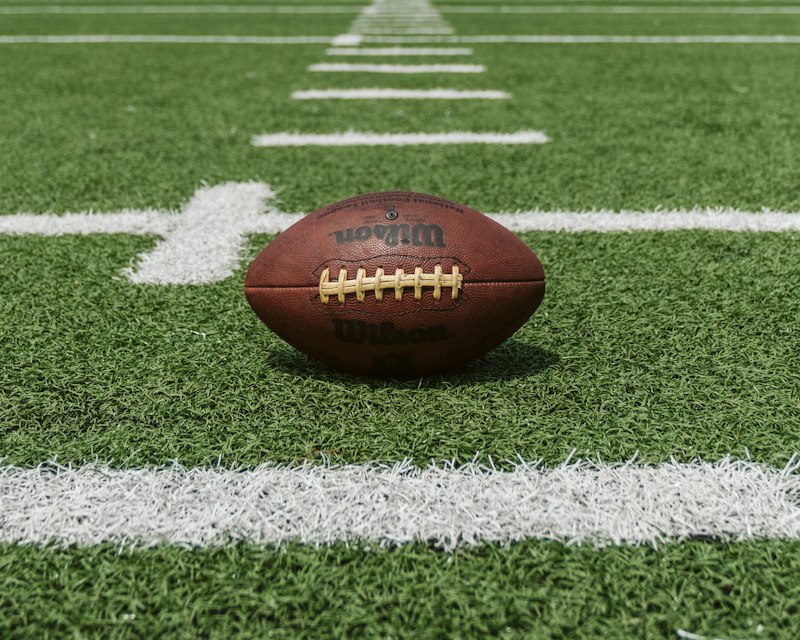 STAMPS
Calgary Stampeders
One of the CFL's most successful franchises with multiple Grey Cup championships. Calgary fans drape the city in red and white on home game weekends and the Stampede grounds buzz with pre-game tailgates every August.
ELKS
Edmonton Elks
Formerly the Eskimos (renamed 2021), the Elks play at Commonwealth Stadium — one of the CFL's largest outdoor venues. Edmonton has won the Grey Cup 14 times, more than any other franchise.
HITMEN
Calgary Hitmen
Junior hockey at the Saddledome — popular with families looking for high-skill, affordable hockey. The Hitmen have won two Memorial Cups and consistently develop players bound for the NHL.
OIL KGS
Edmonton Oil Kings
The Oil Kings play at Rogers Place, giving Edmonton fans year-round top-level hockey. Their 2022 Memorial Cup championship brought the city its first junior title in decades.
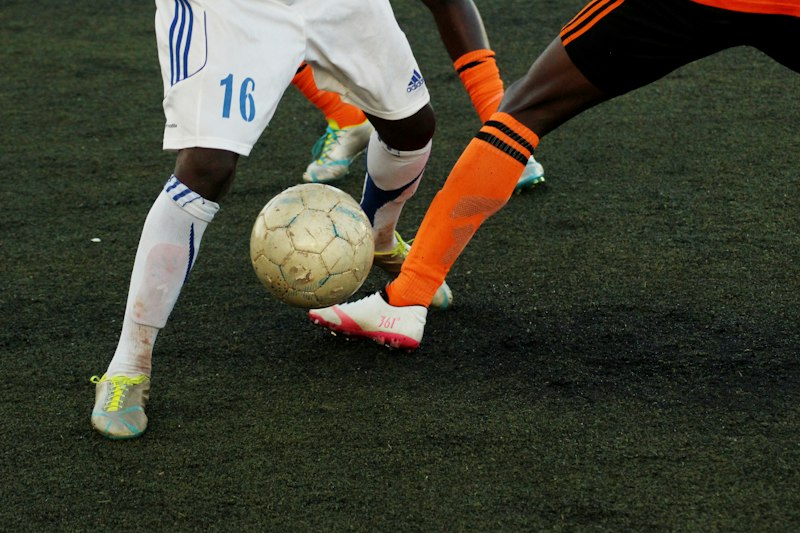 CVALRY
Cavalry FC
Calgary's Canadian Premier League side plays at ATCO Field in Spruce Meadows. Cavalry have won multiple CPL championships and represent Alberta's growing soccer culture.
Culture, Arts & Identity
Alberta's identity is layered — cowboy heritage runs deep, Indigenous cultures are foundational, and an influx of newcomers from across Canada and around the world has made both Calgary and Edmonton surprisingly cosmopolitan. The province has a reputation for conservatism but its cities are genuinely diverse and its arts scenes are often underestimated.
The Calgary Stampede
Every July, Calgary becomes the self-described "greatest outdoor show on Earth." The ten-day Stampede draws over a million visitors, combining rodeo, chuckwagon racing, grandstand shows and midway into something that feels genuinely unlike anywhere else. Even Calgarians who profess mild cynicism about the event tend to get swept up in it — the pancake breakfasts alone are a city-wide ritual.
Indigenous Heritage
The Blackfoot Confederacy, the Tsuut'ina Nation and the Stoney Nakoda peoples have deep roots across southern Alberta. The Blackfoot Crossing Historical Park east of Calgary is one of the most thoughtfully designed Indigenous heritage sites in western Canada. Treaty 6 and Treaty 7 territory covers most of the province, and Reconciliation is an active conversation in both cities.
Ukrainian-Canadian Heritage
Roughly 300,000 Albertans are of Ukrainian descent, giving the province the largest Ukrainian-Canadian population in the country relative to its size. Edmonton's north side has a visible Ukrainian cultural presence — perogie restaurants, Orthodox churches with distinctive onion domes, and events around Ukrainian Christmas in January. The Ukrainian Cultural Heritage Village east of Edmonton is a well-preserved open-air museum of early immigrant life.
Arts in Edmonton
Edmonton hosts one of Canada's largest arts festivals: the Edmonton International Fringe Theatre Festival, the second-largest fringe festival in the world by number of shows. The Chinook winds — warm föhn-type gusts that can push temperatures above zero in January — give the city an unusual energy. The High Level Diner on 114th Street has been a gathering place for artists and writers for decades.
Oil and the Province's Character
The oil industry shapes Alberta more than any other single force. Fort McMurray in the north is the centre of the oil sands operation, one of the world's largest energy projects. The boom-bust cycle is felt personally here in a way that doesn't map onto Toronto or Vancouver experience: a downtown Calgary parking lot that was an active office tower construction site in 2013 might have sat empty for years afterward. That volatility breeds both resilience and a certain fatalism.
Alberta's Hall of Icons
Alberta's combination of mountains, ranchland and resource wealth has produced a curiously specific kind of fame: country singers and hockey players, novelists who set their books on lonely highways, comedians whose timing was sharpened on cold prairie stages. The province punches well above its weight in the cultural conversation, and the names below are only the beginning of the list.
W.O. Mitchell
Mitchell wrote the foothills the way Faulkner wrote Mississippi. Who Has Seen the Wind, set in a fictional prairie town that is unmistakably southern Alberta, remains one of the most-assigned Canadian novels in the country's classrooms — and he could read it aloud, in his rasping public-radio voice, better than any actor.
Joni Mitchell
Joni's earliest gigs were in a Calgary coffeehouse called the Depression on 4th Street SW, where she was billed as Joan Anderson. Albertans claim her gently — Saskatchewan claims her too — and the songwriting voice that shaped a generation was already audible by the time she left the foothills for Toronto.
Hayley Wickenheiser
Four Olympic gold medals, the first woman to score a goal in a men's professional league, and now a doctor and assistant general manager with the Toronto Maple Leafs. The Wickenheiser Female World Hockey Festival, held in Calgary every November, is the largest girls' hockey tournament in the world.
k.d. lang
Raised in a town of 700 on the eastern Alberta prairie, lang built her career out of the same yodelling country tradition that produced Patsy Cline, then quietly reinvented torch singing. Her 1988 cover of "Hallelujah" remains the version Leonard Cohen himself once said he wished he had recorded.
Jarome Iginla
The longest-serving captain in Calgary Flames history, an Olympic gold medallist, and one of the few Black superstars in a sport that has been slow to celebrate them. Iginla retired in 2018 with 625 NHL goals and a permanent place in the rafters of the Saddledome.
Michael J. Fox
Born in Edmonton, raised partly on Canadian Forces bases across the country, Fox has been the face of resilient Hollywood charm since Family Ties. His Parkinson's foundation has raised more than two billion dollars for research — work he often credits, in interviews, to a stubborn western Canadian streak.
Rudy Wiebe
A two-time Governor General's Award winner whose novels (The Temptations of Big Bear, A Discovery of Strangers) reframed prairie history from Indigenous and Mennonite perspectives. He taught at the University of Alberta for decades and shaped a generation of western Canadian writers.
Paul Brandt
Calgary's most enduring country singer and one of the most decorated artists in Canadian Country Music Awards history. Beyond the music, his Not In My City foundation has reshaped how Alberta talks about human trafficking, particularly during Stampede week.
Tommy Chong
Half of Cheech & Chong, the duo that defined an entire vein of countercultural comedy in the 1970s. Chong's Edmonton childhood — his Chinese-Canadian father drove a truck, his Scotch-Irish mother waitressed — gave him the outsider's eye that the act traded on for decades.
Richard E. Taylor
Nobel laureate in Physics (1990) for his work at Stanford on the quark structure of matter. Taylor grew up in southeastern Alberta, the son of a hardware-store owner, and credited his early curiosity to long hours in the back room taking radios apart.
Regional Cuisine: What Alberta Actually Eats
Alberta's food culture is, fundamentally, a beef-and-grain culture — but the past two decades have produced a quietly serious restaurant scene in both big cities, and the prairie pantry has expanded to include Ukrainian, Filipino, Vietnamese and East African flavours that now feel as native as the rib steak. What follows is what's actually on the table.
Alberta Beef
The single ingredient that defines provincial pride. Cattle on the high, dry foothills produce a leaner, grass-finished flavour that ranchers will argue is genuinely different from any other beef on the continent. Caesar's Steakhouse in Calgary has been serving prime rib since 1972; Buchanan's, two blocks away, does a more refined version. At a barbecue, the cut to ask for is the rib eye, the pickle is dill, and the side is potato salad.
Pyrohy & Ukrainian Sausage
Three hundred thousand Albertans of Ukrainian descent built a parallel pantry. Hand-pinched pyrohy (potato-and-cheddar dumplings, often boiled then fried in butter and onions) appear in church-basement fundraisers, deli cases and the freezer aisle of every Edmonton supermarket. Pair with garlicky kovbasa and sour cream and you have a Friday-night dinner that has been Albertan for a hundred and twenty years.
Saskatoon Berry Pie
The saskatoon — a small dark berry, related to the apple, with a flavour somewhere between blueberry and almond — grows wild from the Crowsnest Pass to the Peace River country. A proper saskatoon pie is double-crusted, slightly under-sweetened and served warm with vanilla ice cream. Ask for it at Diane's Restaurant in Beaumont, or at any small-town fall supper.
Calgary's Vietnamese Sub
Calgary's bánh mì shops — Trung Nguyen, Bánh Mì Thi Thi downtown, the dozen counters in the International Avenue strip — produce a sandwich that has become as much a working lunch in Calgary as it is in Saigon. The local style runs heavier on pâté and lighter on chili than the Vancouver version, and rarely costs more than seven dollars.
Ginger Beef
A genuine Alberta invention: deep-fried strips of beef in a sweet, dark, ginger-laden sauce, created at the Silver Inn in Calgary in the 1970s. Order it from any Chinese-Canadian restaurant in the province and you'll get a recognizable variation; ask for it east of Saskatchewan and they'll have no idea what you mean.
Donair
Imported from Halifax in the 1970s and now a Calgary late-night staple. The Albertan version is sweeter than the Maritime original and considerably greasier than the Turkish. Tony's Pizza on 17 Avenue SW and the dozen Pizza 73 outlets across both cities will sell you one at 2 a.m. when nothing else is open.
Whose Land Are You On?
The province now called Alberta is the traditional territory of many Indigenous nations whose presence here long predates the surveyor's line that became the province in 1905. Treaties 6, 7 and 8 cover almost all of the province between them, signed in the 1870s and 1890s and still in force today.
Treaty 7: The Foothills and Southern Plains
Signed at Blackfoot Crossing on the Bow River in September 1877, Treaty 7 covers the southern third of the province and is the territory of the Blackfoot Confederacy — the Siksika, Kainai (Blood) and Piikani (Peigan) Nations — alongside the Tsuut'ina (a Dene-speaking nation), the Stoney Nakoda (Bearspaw, Chiniki and Wesley), and the Métis. The Kainai reserve south of Lethbridge is the largest First Nation reserve by area in Canada. The Blackfoot Crossing Historical Park, an hour east of Calgary, is one of the most thoughtful Indigenous-led interpretive sites in the country and a recommended day trip.
Treaty 6: The Central Belt
Treaty 6, signed at Fort Carlton and Fort Pitt in 1876, runs across central Alberta and Saskatchewan. It is Plains Cree, Woodland Cree, Stoney and Saulteaux territory, and includes a "medicine chest clause" that has shaped Indigenous health-care advocacy ever since. Edmonton, the legislature, the University of Alberta, and most of the central farm country are within Treaty 6.
Treaty 8: The Boreal North
Treaty 8 (1899) covers the northern half of Alberta, the southern Northwest Territories and the northeastern corner of British Columbia. It is the territory of the Cree, Dene Tha', Beaver, Slavey and Chipewyan, and the Métis communities of the Peace River country. Fort McMurray, Wood Buffalo National Park and most of the boreal forest fall within Treaty 8.
The Métis Nation of Alberta
Alberta is the only province in Canada with legislated Métis settlements — eight of them, established in 1938, the only Métis land base in the country. Métis culture is most visible at Lac Ste. Anne (the annual pilgrimage every July draws tens of thousands), in the fiddle-and-jig traditions of St. Albert and Lac La Biche, and in the Métis Crossing interpretive centre on the North Saskatchewan River, an hour northeast of Edmonton.
Your Best 5-Day Stay in Alberta
The honest answer to "what should I do with five days?" depends on whether you've come for the mountains or the cities. The itinerary below is the one we send to friends visiting for the first time: it begins in Calgary, runs the Bow Valley Parkway to Banff and the Icefields Parkway to Jasper, and turns back toward Edmonton on Day 5. You will need a rental car. You will not regret a single kilometre of the drive.
Calgary — Get Your Bearings
Fly into YYC in the morning, drop your bags, and walk the Stephen Avenue pedestrian mall before lunch. Eat at Native Tongues Taqueria or grab a sandwich from Bánh Mì Thi Thi and take it to Prince's Island Park along the Bow River. Spend the afternoon at the Glenbow Museum (newly reopened after a major renovation) for the best one-stop introduction to western Canadian history.
For dinner, Model Milk on 17 Avenue SW or Pigeonhole if you can get a reservation. End the day with a drink on the rooftop of the Hyatt or, if it's clear, a drive up to the Calgary Tower observation deck for the late-evening light over the foothills.
Calgary to Banff — Into the Rockies
Leave Calgary by 8 a.m. and take the Trans-Canada west. Stop in Canmore for a coffee at Communitea or a proper breakfast at Crazyweed Kitchen. Carry on to Banff for an early-afternoon arrival, drop bags, and ride the Banff Gondola up Sulphur Mountain — the views from the boardwalk at the top take in six mountain ranges and require almost no walking.
In the late afternoon, soak at the Banff Upper Hot Springs (CAD $17, towel rental available, surprisingly uncrowded after 6 p.m.). Dinner at the Bison Restaurant on Bear Street — the elk burger is the move. Sleep in town if you can; the in-park rate triples your money but saves an hour every morning.
Lake Louise & Moraine Lake — The Postcard Day
Set an alarm for 5:45 a.m. Drive the 55 minutes to Lake Louise, park at the Park & Ride at the ski hill, and take the Parks Canada shuttle to Moraine Lake (booked weeks in advance). The first light on the Valley of the Ten Peaks is what you came for. Hike up to Larch Valley if it's mid-September into early October — the larches turn gold for about ten days a year and it's the single most photographed two-week window in Canada.
Back at Lake Louise, hike to the Lake Agnes Tea House (3.4 km, moderate, about an hour up). Lunch on the deck. Drive back to Banff via the slower, prettier Bow Valley Parkway and watch for elk in the meadows around Johnston Canyon.
The Icefields Parkway — Banff to Jasper
The Icefields Parkway, all 232 km of it, is the single most beautiful drive in Canada and possibly in North America. Plan a full day. Stop at Bow Lake (Num-Ti-Jah Lodge, where you can have coffee on the porch), Peyto Lake (a five-minute walk to a viewpoint that turns the lake glacial blue under any weather), the Saskatchewan Crossing, and the Athabasca Glacier — where you can walk to the toe of the ice or take an Ice Explorer onto the surface itself.
Carry on to Athabasca Falls, then Jasper townsite. The town is partially rebuilding after the 2024 wildfire; check ahead for accommodation and confirm your booking. Dinner at the Jasper Brewing Company or, if you're camping, a cookout at Wapiti Campground with the elk grazing on the next loop over.
Maligne Canyon & Home Through the Foothills
Walk the Maligne Canyon trail before breakfast (it's quietest from 7 to 9 a.m.) — the limestone slot canyon is more dramatic than its photographs suggest. If you have time, a 45-minute drive out to Maligne Lake will get you to Spirit Island; the boat cruise runs every two hours in summer.
For the drive home, choose your ending. Loop back to Edmonton (4 hours) for the Muttart Conservatory, dinner on 124 Street and an evening flight out of YEG; or retrace the Icefields Parkway south and stop in Drumheller's badlands en route to Calgary — the Royal Tyrrell Museum is one of the great paleontology collections in the world and a fitting last stop.
Five Days in Calgary
Calgary rewards visitors who stop pretending it's only a launchpad for Banff. Five days here gives you the rodeo grounds, the river paths, the foothills, and a proper taste of why a quarter of a million Albertans wear cowboy boots without irony. Stay downtown or in Inglewood for walkability; rent a car for at least Days 3 and 4.
Stephen Avenue, Glenbow & the Bow River
Start with coffee at Phil & Sebastian in the Simmons Building, then walk west along the +15 indoor pedestrian network if it's cold or down Stephen Avenue if it isn't. The newly renovated Glenbow Museum is the city's anchor; budget two hours for the western Canadian galleries and the Niitsitapiisinni exhibit on Blackfoot history. Lunch at Native Tongues Taqueria in the Beltline.
Spend the afternoon walking the Bow River pathway from Prince's Island Park to Eau Claire and across the Peace Bridge. Climb the Calgary Tower at sunset (CAD $22) for the foothills-to-Rockies horizon. Dinner at Model Milk on 17 Ave SW; the menu changes weekly and the dining room buzzes.
Inglewood, the Zoo & Studio Bell
Cross into Inglewood, Calgary's oldest neighbourhood, for breakfast at Rosso Coffee Roasters and a slow wander through the vintage shops on 9th Avenue. The Calgary Zoo's Land of Lemurs and Canadian Wilds passes the morning easily; stop at the adjacent Inglewood Bird Sanctuary for an hour of riverside trails.
In the afternoon, Studio Bell — the National Music Centre — is the surprise of any Calgary trip. Five floors, 2,000 instruments, restored Rolling Stones mobile studio, and rotating exhibits on Canadian music. Dinner at Pigeonhole if you can land a reservation; Ten Foot Henry is the always-reliable backup.
Heritage Park & Kananaskis
Heritage Park Historical Village, on the Glenmore Reservoir, is North America's second-largest living history museum. The 1860s-to-1930s prairie townsite, the steam train, and the antique midway are all genuinely well done. Allow three hours and ride the SS Moyie paddlewheeler if it's running.
Drive an hour west into Kananaskis Country in the afternoon. The Highwood Pass, when it's open, is the highest paved road in Canada. Even if you don't drive the whole loop, getting to Barrier Lake and walking the Prairie View trail puts you in Rocky Mountain wilderness with a fraction of Banff's crowds. Dinner back in town at Anju, a Korean-Canadian fusion spot that locals quietly defend as the city's best.
The Stampede Grounds & Drumheller Day Trip
If you're here in early July, the Stampede itself fills this day. Otherwise, take the 90-minute drive northeast to Drumheller and the Royal Tyrrell Museum — one of the world's great paleontology collections, set in the badlands where many of its dinosaurs were dug up. Walk the Hoodoo Trail and the Horseshoe Canyon viewpoint on the way back.
Return to Calgary for an early supper at Charcut Roast House and an evening at the Stampede grounds even off-season — the BMO Centre, the casino, and the Saddledome host events year-round, and the Flames play October through April.
Brunch, Foothills Drive & Departure
Brunch at OEB Breakfast Co. is the local rite of passage; the soul-in-a-bowl is worth the line. Drive south on Highway 22 — the Cowboy Trail — through Bragg Creek and Black Diamond for an hour of golden foothills, then loop back via Okotoks and the Big Rock erratic, the largest glacial erratic in the world.
Back in town, swing through Bridgeland for one last meal at Una Pizza or Tom's House of Pizza (the eccentric local institution), then leave time for YYC's security; the airport runs efficiently but the US preclearance side gets backed up by 4 p.m.
Five Days in Edmonton
Edmonton is the festival city, the river-valley city, and the one Albertans live in rather than perform for. Five days lets you cover the river-valley parks, the legislature, Old Strathcona, the gallery and museum quarter, and a day trip to Elk Island. Summer is the prime window — June through August is when 25 festivals run back to back — but a winter visit catches the ice castle, the Silver Skate Festival, and the underrated Christmas markets.
Old Strathcona & Whyte Avenue
Begin in Old Strathcona, the brick-and-iron neighbourhood south of the river that holds Edmonton's best independent bookstores, vintage shops, and weekend farmers' market. Coffee at Transcend, breakfast at Highlevel Diner, and a slow Whyte Avenue walk before the afternoon pulls you across the High Level Bridge into downtown.
The Art Gallery of Alberta — the silvery, ribboned building by Randall Stout — is worth two hours and a meal at its third-floor restaurant. End the day at the Yardbird Suite for live jazz; the room is small, the bookings are serious, and tickets sell out the day they open.
The Legislature, the River Valley & Fort Edmonton
Tour the Alberta Legislature in the morning (free, hourly, and the dome's interior is more impressive than the exterior suggests). Walk down through the Legislature Grounds to the river valley — North America's largest urban park system at over 7,400 hectares.
Spend the afternoon at Fort Edmonton Park, which reconstructs four eras of the city from 1846 to 1929 across four streetscapes. The new Indigenous Peoples Experience, opened 2021, reframes the entire site and is the most thoughtful interpretive addition any Canadian living-history park has made in years.
West Edmonton Mall & the Royal Alberta Museum
You can roll your eyes at West Edmonton Mall right up until you're inside it. World Waterpark, Galaxyland indoor amusement park, the ice rink, the sea-lion show, the replica Santa Maria — three hours minimum, more if you have kids. Lunch in the food court is fine; Sherlock Holmes Pub on Bourbon Street is better.
The Royal Alberta Museum, downtown in its 2018 building, is the largest museum in western Canada. The Manitou Stone (Iron Creek meteorite) gallery is the centrepiece. Allow three hours and finish the day at Rostizado for Mexican rotisserie that has earned every Best New Restaurant nod thrown at it.
Elk Island National Park
Drive 35 minutes east to Elk Island, the only fully fenced national park in Canada and the source herd for plains bison reintroductions across North America. The park is small, walkable, and almost guarantees bison sightings on the auto loop. Astotin Lake is the picnic centre; the Beaver Pond Trail is the easy short walk.
Stay until dusk if it's clear — Elk Island is a Dark Sky Preserve and the Milky Way over the lake is staggering. Dinner back in town at Biera in the Ritchie Market, where local brewing meets Austrian-influenced sharing plates.
124 Street, the Muttart & Departure
Brunch at Café Bicyclette in La Cité Francophone, the city's francophone cultural centre, then walk 124 Street's gallery walk: Bearclaw Gallery for Indigenous art is the don't-miss. Afternoon at the Muttart Conservatory — four glass pyramids of climate-controlled biomes set against the river-valley skyline.
If you have time before the flight, Italian Centre Shop in Little Italy assembles the best sandwich in the city for the road. YEG is well-run and 25 minutes south of downtown; Edmontonians regard it with the affectionate exasperation reserved for an aging but functional family member.