

Understanding Quebec begins with the recognition that most things which are true of the rest of Canada are less true here. The rest of the country is a former British colony; Quebec is a former French one, handed to Britain in 1763. The rest of the country runs on common law; Quebec runs on a civil code descended from the Napoleonic one. The rest of the country conducts public life mainly in English; Quebec has, since the 1970s, ensured that it conducts public life in French. None of that means Quebec is not Canadian. It means Canada is a federation built around the accommodation of difference, and Quebec is the most visible of those differences.
- Capital
- Quebec City
- Largest city
- Montreal (~4.4 million metro)
- Population
- ~8.9 million
- Joined Confederation
- 1867 (founding)
- Official language
- French
- Time Zone
- Eastern (most), Atlantic (far east coast)
- Sales Tax
- 14.975% (5% GST + 9.975% QST)
- Drinking Age
- 18
A wide-angle overview
Quebec is the largest province of Canada by area — bigger than Alaska, almost three times the size of France — and the second-largest by population, with roughly 8.9 million residents. About four out of five of those residents live within a 100-kilometre band on either side of the St. Lawrence River, which is where European Quebec was settled and where almost all of its agriculture, industry and urban life remain. North of the boreal cutoff line, vast Indigenous regions like Eeyou Istchee (the Cree territory) and Nunavik (the Inuit-administered region above the 55th parallel) cover most of the province's actual landmass.
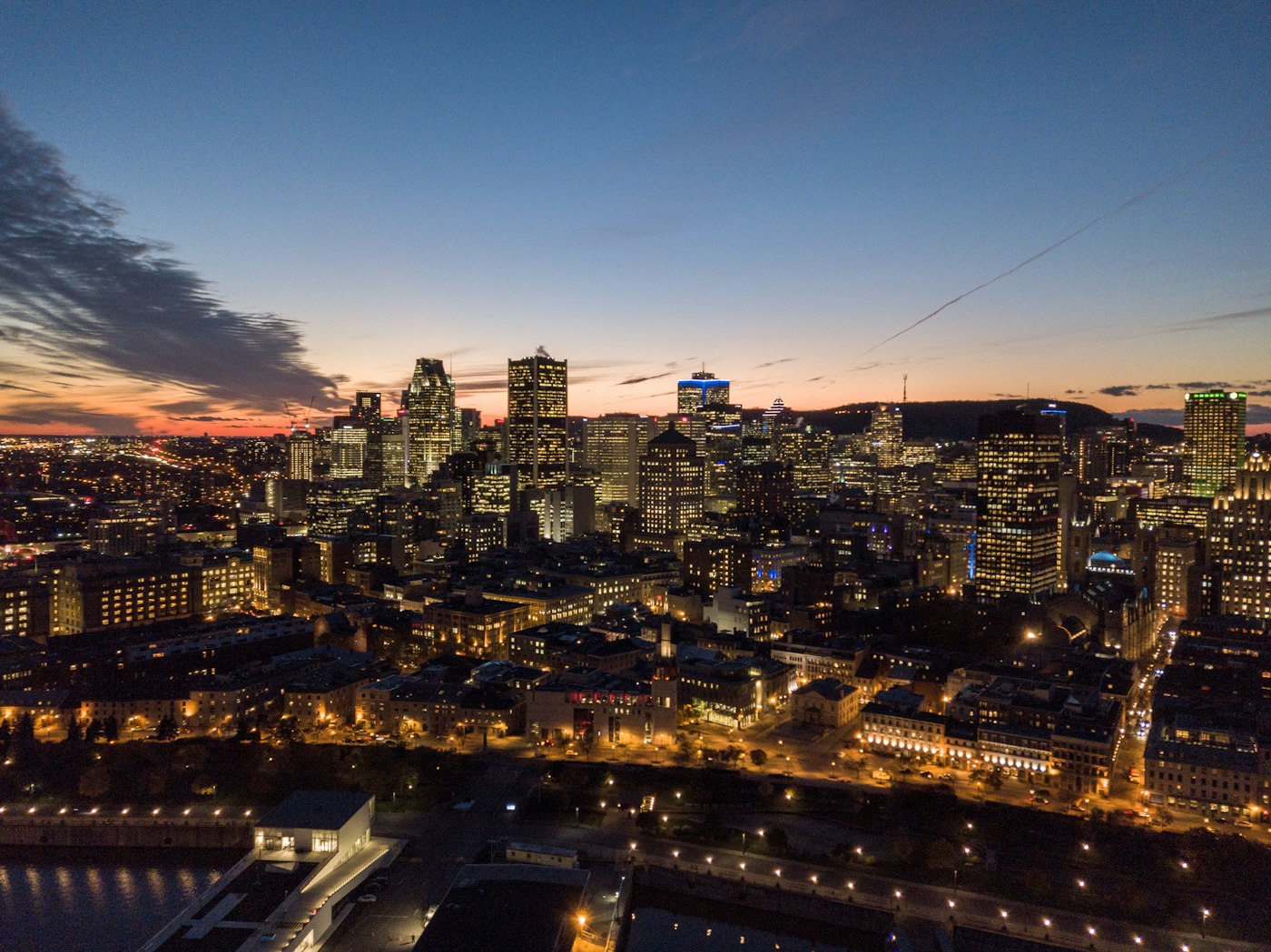
The province's economy is more diversified than its image suggests. Hydro-Québec, the publicly owned utility, is one of the largest electricity producers in the world and powers an industrial base that includes aerospace (Bombardier and Pratt & Whitney in greater Montreal), aluminum (Saguenay and the North Shore), pharmaceuticals, video games (Ubisoft Montreal alone employs over 4,500 people), and a deep banking and financial services sector based in Montreal. Quebec's GDP per capita has lagged Ontario's and Alberta's for decades but the gap has narrowed since the mid-2010s.
For visitors, the practical consequences of Quebec's distinctness are small but worth knowing. Signs are in French, sometimes exclusively. Government services are delivered in French. Sales tax is calculated as the federal 5 percent GST plus the 9.975 percent QST — total 14.975 percent, often rounded to 15 percent in conversation. Most service workers in Montreal, Quebec City, and the major tourist regions switch to English the instant they hear you struggling, but politeness goes a long way; starting with a "bonjour" is almost always appreciated.
Politically, Quebec has been governed since 2018 by the Coalition Avenir Québec under François Legault, a centre-right nationalist party that has consolidated the province's political centre. The Parti Québécois (sovereignist) and Québec Solidaire (left, also sovereignist) form the principal opposition, with the Quebec Liberals reduced to a small caucus largely concentrated in anglophone and allophone Montreal ridings. Sovereignty support has hovered around 35 to 40 percent in recent polls; a third referendum, while occasionally floated, is not on the immediate horizon as of mid-2026.
A compact history
Samuel de Champlain founded Quebec City in 1608 — one of the oldest European cities in North America. The French colony of New France stretched from there along the St. Lawrence, around the Great Lakes, and all the way down the Mississippi to New Orleans at its height in the early 1700s. The Seven Years' War, fought partly on the Plains of Abraham above Quebec City in 1759, ended with Britain taking control in 1763. The Quebec Act of 1774 famously preserved French civil law, the Catholic Church, and the seigneurial system — a set of accommodations that kept Quebec from joining the American Revolution and arguably saved the British colonies north of the Great Lakes.
For most of the 19th and early 20th centuries Quebec was a rural, largely Catholic, francophone province whose elite was a small English-speaking commercial class concentrated in Montreal. The Quiet Revolution of the 1960s — six or seven years of intense state-led modernisation — transformed Quebec almost overnight into a secular, industrialising society with a strong public sector and a confident French-language identity. The 1970s and 1980s saw the rise of modern Québécois nationalism, two sovereignty referendums (1980 and 1995, both defeated, the second by less than one percent), and the Charter of the French Language (Bill 101), which made French the sole official language of the province.
The post-1995 decades have been more pragmatic than ideological. Quebec has run its own immigration selection program (the Programme régulier des travailleurs qualifiés), maintained the lowest tuition fees in Canada for Quebec residents, built one of the most generous public childcare systems in North America (the famous $7-a-day daycare, now $9.85 a day after inflation indexing), and kept its taxes higher than the rest of Canada to pay for those programs. Whether the trade-off works depends on what you value; most Quebecers, by a wide margin in poll after poll, say it does.
The Indigenous history of Quebec is older than the European one and has been increasingly central to the province's politics. The 1975 James Bay and Northern Quebec Agreement was the first modern treaty in Canadian history; the 2002 Paix des Braves between Quebec and the Cree Nation has shaped resource development in the north for two decades. The findings of the 2019 Viens Commission on relations between Quebec public services and Indigenous peoples, and the 2020 death of Joyce Echaquan in a Joliette hospital, have kept these questions in front of provincial politics.
Montreal

- Metro population
- ~4.4 million
- French at home
- ~65%
- Average 1-bed rent (2026)
- CAD $1,600 – $1,900 in central neighbourhoods
- Best months to visit
- Late June – early September
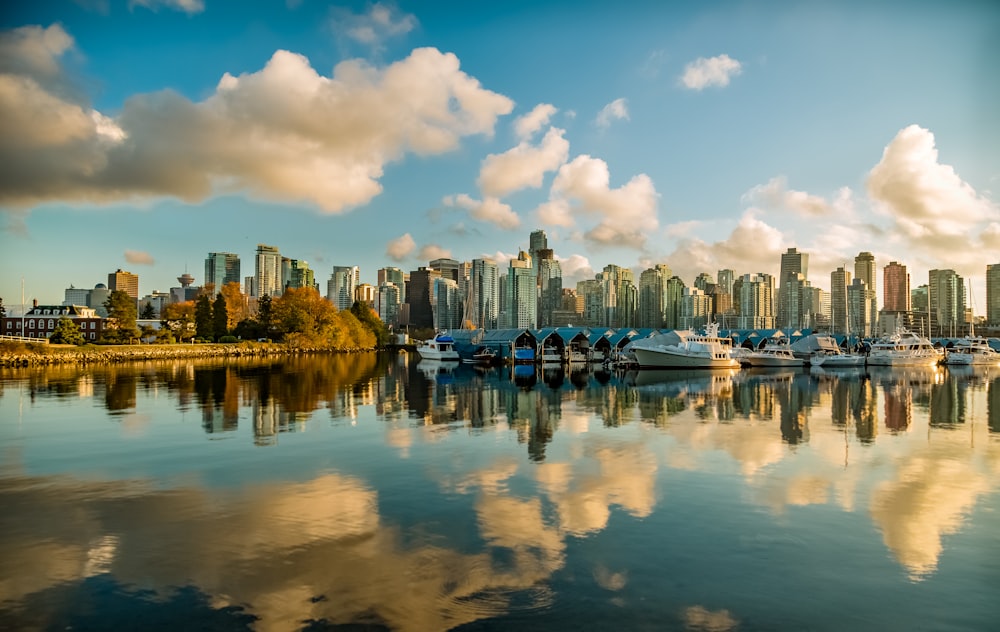
Montreal is the second-largest city in Canada by population and the largest French-speaking city in the Americas. It sits on an island at the confluence of the Ottawa and St. Lawrence Rivers, dominated by Mount Royal, the small mountain Frederick Law Olmsted laid out as a park in 1876 and from which the city takes its name. About 65 percent of Montrealers speak French at home, around 20 percent speak English, and the remaining 15 percent speak something else — Arabic, Spanish, Mandarin, Haitian Creole, Italian. Most Montrealers are bilingual; many are trilingual.
The dominant public language is French; the business language in many offices is a mix; some neighbourhoods (Outremont, Plateau, Villeray) feel overwhelmingly French, while others (NDG, Westmount, parts of downtown) are more bilingual or English-leaning. Le Plateau Mont-Royal is the obvious starting point for a visitor: leafy streets, three-storey walk-ups with the iconic exterior staircases, a dense network of bakeries and bookstores and cafés. Mile End, just north, was the old Hasidic neighbourhood that turned into an indie-music and start-up district in the 2000s; it is where two of the city's famous bagel bakeries, St-Viateur and Fairmount, have argued for forty years about which is superior. (St-Viateur is the better one, but both deserve the visit.)
Old Montreal (Vieux-Montréal) is the 17th- and 18th-century core down by the port, tourist-heavy but genuinely beautiful, with cobblestoned streets that close to cars on summer weekends. The Quartier des Spectacles, a downtown arts district, hosts the Place des Arts complex and most of the major summer festivals. Little Italy, Chinatown, the Latin Quarter around UQAM, the Gay Village along Sainte-Catherine, and the Atwater Market each have their own character.
Post-secondary education in Montreal
Montreal has four major universities — an unusual concentration for a North American city. McGill University, founded in 1821, is the city's English-language flagship and consistently ranks among the top universities in the world; the medical school, the law faculty, and the Desautels Faculty of Management are the international draws. The Université de Montréal, on the north slope of Mount Royal, is the largest French-language university in the Americas with around 67,000 students; its medical school is the largest in Canada and HEC Montréal, its affiliated business school, is one of the country's best. UQAM (Université du Québec à Montréal) is the public university created in 1969 to make French-language higher education accessible to working-class Quebecers and remains a culturally influential institution in the city. Concordia University, the city's smaller English-language university, has particular strengths in fine arts, journalism, and software engineering.
Tuition for Quebec residents is the lowest in Canada by a wide margin (roughly $3,000 per year for an undergraduate program). Out-of-province Canadian students pay considerably more after a 2024 tuition reform, and international tuition runs $20,000 to $50,000 a year depending on faculty. The combined Montreal student population is around 200,000, which is part of why the city feels younger and more energetic than its overall age structure would suggest.
Housing & cost of living in Montreal
Montreal is comfortably the best big-city value in Canada in 2026. A one-bedroom in the Plateau or Mile End rents for about CAD $1,600 to $1,900 a month; in Verdun, Rosemont or Villeray you can still find one for $1,300 to $1,600; in NDG or Lachine, often less. The benchmark price for a triplex (the classic Montreal investment property — you live in one apartment and rent the other two) sits around $850,000 in central neighbourhoods, which is approximately one-third of what an equivalent property would cost in Toronto.
Groceries are similar to Toronto but wine and cheese are cheaper (the SAQ stocks more European wine more cheaply than the LCBO) and restaurant meals run about 15 percent less than equivalent Toronto meals. Property taxes are lower than Toronto's; income taxes are higher (Quebec runs its own provincial income tax separately from the federal one, with a top marginal rate around 25.75 percent on top of the federal). The combined effect for a middle-income household is that Montreal trades higher direct taxation for substantially lower housing costs and access to a generous suite of social programs. For a single person earning $80,000, take-home pay is somewhat lower than in Ontario, but the same person in Montreal can usually rent better and save more.
Cultural scene, food & tourist attractions
The summer festival calendar is almost comically dense: the Montreal International Jazz Festival and the Fringe in June, Just for Laughs in mid-July, Les Francos and Osheaga in late July and early August, MUTEK in August, and a half-dozen free outdoor events filling every weekend. The Place des Arts complex, the contemporary art museum (MAC) and the Maison Symphonique anchor the formal cultural calendar. The Montreal Museum of Fine Arts on Sherbrooke Street has the city's strongest permanent collection.
The food scene is more distinctive than Toronto's. The classic dishes — poutine, smoked meat, bagels, tourtière — are all here and worth eating, even if the spots on the tourist circuit (Schwartz's, La Banquise) are not necessarily the best in town. The bigger story is the neighbourhood restaurant culture: bring-your-own-wine BYOB restaurants, a Quebec institution; the wave of Québécois terroir cooking led by Joe Beef and its imitators; an excellent North African and Middle Eastern food scene in Villeray and Parc-Extension; the Vietnamese strip on Côte-des-Neiges. Reservations at the better tables now require booking weeks ahead.
The Montreal Metro — four lines, clean, reliable, architecturally distinctive in a way Toronto's stations are not — is one of the best transit systems in the country. A single fare is CAD $3.75; an unlimited 3-day pass for tourists is $23.25. The system closes between 1 a.m. and 5 a.m. (no Canadian transit system runs 24 hours).
Sports & recreation
The Montreal Canadiens (NHL), with 24 Stanley Cups, are the most decorated franchise in professional hockey and the closest thing the city has to a civic religion. They play at the Bell Centre downtown; tickets are difficult and expensive when the team is good, slightly easier when it is rebuilding (which it has been doing since 2021). The CF Montréal of MLS plays at Saputo Stadium; the Alouettes (CFL) play at Molson Stadium and won the Grey Cup in 2023. Major League Baseball left the city in 2004 with the relocation of the Expos, but the campaign to bring it back, attached to a mooted second downtown stadium, occasionally re-emerges.
Recreationally, Mount Royal is the heart of the city: a 200-hectare forested park with summer paths and winter cross-country ski trails, all 15 minutes from downtown. The Lachine Canal cycle path runs 14 km west to Lake Saint-Louis along an old industrial corridor. In winter, the Mont-Sainte-Anne and Tremblant ski resorts are within a 90-minute to 2-hour drive of the city; closer in, the small Bromont and Sutton hills get heavy weekend traffic. The skating rink at the Old Port is the picture-postcard outdoor rink of the city.
The honest take
Montreal is the most distinctive large city in Canada and arguably the best urban deal on the continent. It has the universities, the food, the metro, the festivals, the housing prices, and a quality of light in October that no other Canadian city can match. The trade-offs are real: provincial politics that turn periodically on identity questions newcomers find awkward; winters that are colder than Toronto's; an income tax bill that arrives every April with a crunch. None of those are dealbreakers for the Anglophone, Allophone or Francophone newcomers who have made Montreal one of the fastest-growing cities in Canada by net interprovincial migration since 2020.
Most Popular Museum: Musée des beaux-arts de Montréal
The Musée des beaux-arts de Montréal — the MBAM — is the oldest and largest fine arts museum in Canada, and its five interconnected pavilions along Sherbrooke Street West represent one of the great museum complexes in North America. The original 1912 Beaux-Arts building on the north side of Sherbrooke sits across from the Jean-Noël Desmarais Pavilion, whose underground connection creates a unified museum spanning the full spectrum of art history from ancient Egypt to contemporary video installation. The Claire and Marc Bourgie Pavilion, built within a deconsecrated neo-Gothic church, houses the Canadian and Quebec art collection and is architecturally breathtaking in its own right — the original church stained glass survives and casts coloured light over the galleries.
The MBAM's permanent collection spans 44,000 works and includes exceptional holdings in decorative arts, design, and Quebec art from the New France period through to the present. The Michal and Renata Hornstein Pavilion for Peace houses the international collection. Budget a full day if you're serious about it; most visitors emerge three or four hours in realising they've seen perhaps half of what they wanted to. The museum café is excellent, which matters when you need to regroup mid-visit.
Your Best 5 Days in Montréal
Montréal is one of the great cities of North America — a place of extraordinary food, live music, genuine bilingual culture, and architectural drama that feels like nowhere else on the continent. Five days barely scratches the surface, but it's a beginning.
Old Montréal & the Port
Start in Vieux-Montréal, where the cobblestone streets, seventeenth-century stone buildings, and the magnificent Notre-Dame Basilica create a European atmosphere unique in Canada. The AURA light show inside the basilica is a modern addition but remarkably well done. Walk to the Old Port's Pointe-à-Callière archaeology museum, built directly above Montréal's founding site with excavations visible below the floor. End the day on the terrace above the port as the St. Lawrence catches the evening light.
Plateau Mont-Royal & Mile End
These two adjacent neighbourhoods represent Montréal's cultural and culinary soul. Walk Rue Saint-Denis from the Latin Quarter north through the Plateau — the Victorian row houses with their exterior spiral staircases are one of Montréal's most distinctive architectural signatures. Cross into Mile End for what is consistently rated among the best bagel shops in the world (St-Viateur and Fairmount have been competing for seventy years). The independent music venues, bookshops, and cafés make this the most creative square kilometre in Canada.
Mont Royal & the MBAM
Hike or cycle up Mont Royal — Frederick Law Olmsted designed the park in 1876 on the same principles he applied to Central Park — and look down over the city from the chalet lookout. Descend via the western slope to Westmount and walk east along Sherbrooke Street to the MBAM. Allocate three to four hours inside. Dinner in the Golden Square Mile or the western part of the Plateau.
Jean-Talon Market & Little Italy
Jean-Talon Market in the Petite-Patrie neighbourhood is the finest farmers' market in Canada — a covered market with over three hundred vendors selling Québec produce, artisan foods, and seasonal specialties. The surrounding streets of Little Italy have been feeding Montrealers since Italian immigration waves in the early twentieth century. Walk south along Saint-Laurent Boulevard — "The Main" — which passes through successive immigrant neighbourhoods from Portuguese to Greek and back again.
Rosemont, the Biosphere & Olympic Park
The Parc olympique complex built for the 1976 Games is one of the most controversial architectural ensembles in Canadian history — the tower still leans visibly — but the Biodôme, Insectarium, and Jardin botanique (the third-largest botanical garden in the world) make it a genuinely excellent day destination. The Biosphère, Buckminster Fuller's geodesic dome salvaged from Expo 67, is now an environmental science museum. End the day in the Rosemont neighbourhood for dinner — it's become one of the most exciting restaurant destinations in the city.
Quebec City
- Metro population
- ~830,000
- Founded
- 1608 (by Samuel de Champlain)
- UNESCO Status
- Old Quebec, since 1985
- Average 1-bed rent (2026)
- CAD $1,200 – $1,500
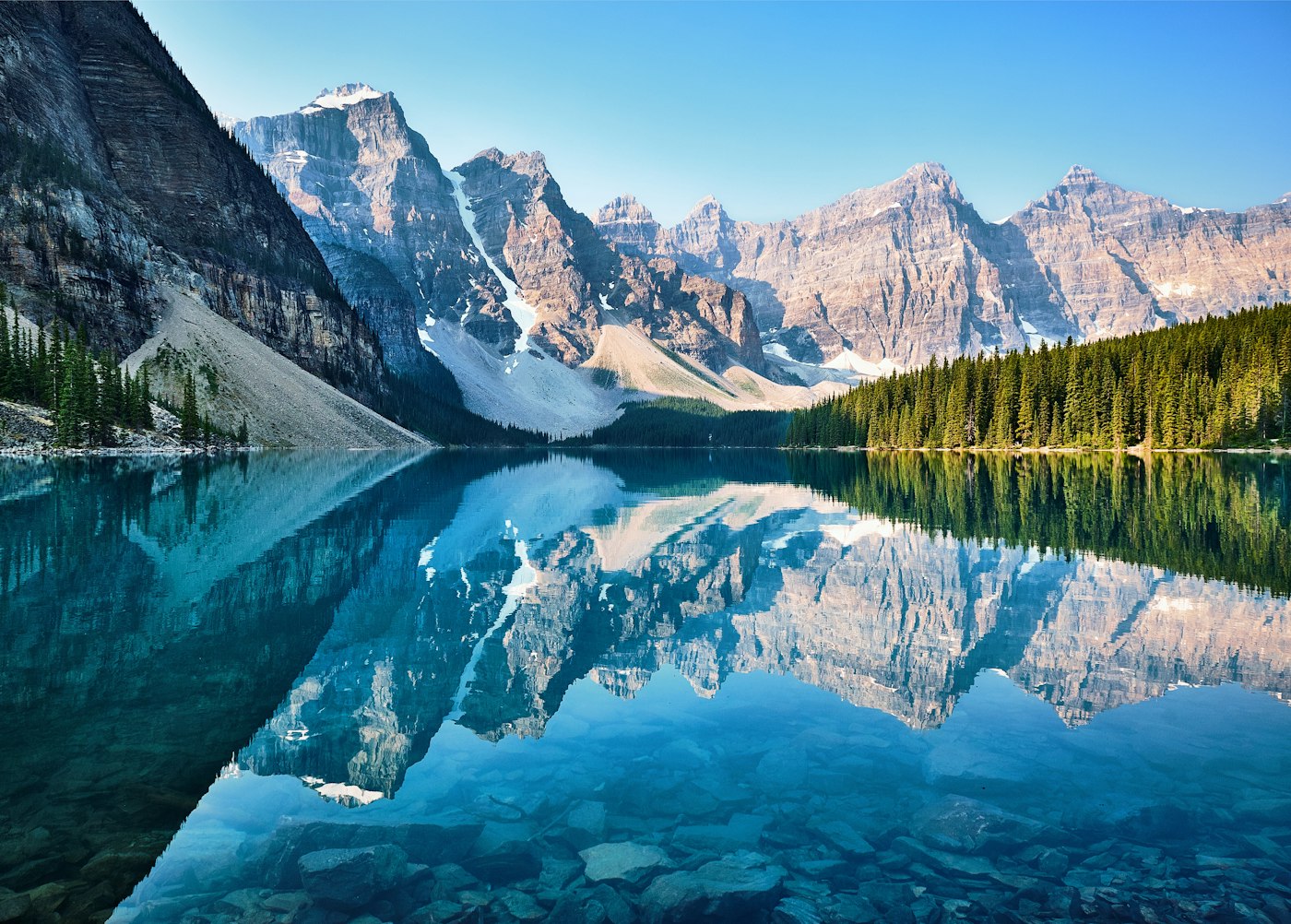
Quebec City (Ville de Québec) is the provincial capital, a city of about 830,000 perched on a bluff above the St. Lawrence River. The walled old city — the only fortified city north of Mexico — has been a UNESCO World Heritage site since 1985. It is the kind of place that looks like a postcard without trying, and for many visitors it is the highlight of an eastern Canada trip. About 95 percent of Quebec City residents speak French at home, which makes the city function as the linguistic and political heart of Quebec proper, while Montreal increasingly functions as its multicultural commercial capital.
The walls you see today are largely 19th-century British reconstructions on earlier French foundations. Walk them in either direction and you can do the entire perimeter in two hours with photographs. Rue du Petit-Champlain, in the Lower Town, is often listed as the most beautiful street in North America; it is short and crowded but worth the visit. The funicular down from the Upper Town to the Lower Town is the easiest way to make the descent without burning your knees.
The Plains of Abraham — the battlefield where New France effectively ended in 1759 — now functions as the city's main park, and was the site of Paul McCartney's famous free 2008 concert for the city's 400th anniversary. The Musée de la civilisation in the Lower Town and the Musée national des beaux-arts du Québec on the Plains are the two major museums. In winter, the city throws a Carnaval de Québec that is a full-commitment two-week celebration; if you are visiting in early February, plan around it.
Post-secondary education in Quebec City
Université Laval, the oldest French-language university in North America (founded as a seminary in 1663, reorganised as a university in 1852), is the city's academic anchor. Roughly 43,000 students attend; the medical school, the forestry faculty (one of the best in the world), the law faculty and the school of architecture are the standouts. Laval's main campus is in Sainte-Foy, on the western edge of the city, in a complex of brutalist 1960s buildings that locals either love or want demolished depending on the day. Tuition for Quebec residents is around $3,300 per year; out-of-province Canadian students pay roughly $9,000; international tuition runs $18,000 to $30,000 depending on program.
Housing & cost of living in Quebec City
Quebec City is significantly cheaper than Montreal — one of the cheapest large urban centres in eastern Canada. A one-bedroom rents for roughly CAD $1,200 to $1,500 in central neighbourhoods like Saint-Roch, Saint-Sauveur and Limoilou; in the suburbs of Sainte-Foy and Charlesbourg you can find them for $1,000 to $1,300. A detached home in a desirable neighbourhood like Montcalm sells for $550,000 to $750,000. The labour market is dominated by the provincial public service, the universities and hospitals, and a growing cluster of insurance companies (the city is sometimes called Quebec's insurance capital).
Cultural scene, food & tourist attractions
Beyond the obvious old-city attractions, the Saint-Roch district downhill from the walls has been the city's most talked-about neighbourhood for the past decade — a former industrial area now packed with restaurants, microbreweries, and tech offices. The Chez Boulay menu, the patisserie at Paillard and the smoked-meat at Buffet de l'Antiquaire are reliable starting points. Day trips: Île d'Orléans (a farming island in the St. Lawrence ten minutes east, with strawberry farms and cider houses); Montmorency Falls (higher than Niagara, though much narrower); the Côte-de-Beaupré church-and-shrine drive; the Mont-Sainte-Anne ski resort 40 km east.
Sports & recreation
Quebec City lost its NHL team, the Nordiques, to Colorado in 1995 — a wound the city has not entirely healed from. Multiple campaigns to attract an NHL expansion or relocation team have run since the new Vidéotron Centre arena opened in 2015, but no team has come. The Quebec Remparts of the QMJHL, owned in recent years by Patrick Roy, are the city's main spectator sport. The Quebec City Marathon in late August and the Pentathlon des Neiges (a winter multi-sport event on the Plains) are the major participation events.
The honest take
Two full days is enough for the old city; a third day lets you get out to Île d'Orléans or the Côte-de-Beaupré. As a place to live, Quebec City is the most affordable big city in eastern Canada, with strong public services and a remarkable physical setting. The downside is that it is not as cosmopolitan as Montreal or Toronto, French-language ability is more important than in Montreal, and winters along the open river are punishing. For a French-speaking professional, particularly in the public sector or the insurance industry, it is one of the best deals in the country.
Most Popular Museum: Musée de la Civilisation
The Musée de la Civilisation in Old Québec City is, by any measure, one of the finest museums in Canada — a claim that would once have seemed parochial but is now backed by decades of international recognition. Moshe Safdie's 1988 building in the Lower Town incorporates an eighteenth-century house and the historic Estèbe House directly into the museum structure, so that the building itself becomes part of the exhibit. The permanent collection explores Québec civilization through themes of language, identity, Indigenous heritage, and global culture with an intelligence and seriousness that never becomes didactic.
The Nous, les Premières Nations permanent exhibition — created in deep collaboration with eleven First Nations of Québec — is one of the most thoughtful and respectful Indigenous cultural exhibitions in Canadian museums. The temporary programming is consistently ambitious: the MCQ has hosted major international exhibitions from Europe and Asia that would have been difficult to see anywhere else in the country. This is not a regional museum with regional ambitions — it operates confidently at a global cultural level, and it's free on Tuesdays from October to May.
Your Best 5 Days in Québec City
Québec City is unlike any other city in North America. The fortified walls, the Château Frontenac presiding over the St. Lawrence, the cobblestone streets of the Lower Town — it is genuinely European in a way that Montréal aspires to but Québec City simply is.
Old Upper Town & the Fortifications
Walk the walls of the only remaining fortified city north of Mexico — four kilometres of preserved ramparts that offer views over the St. Lawrence and the Plains of Abraham. Visit the Citadelle, the star-shaped British fort and still-active Canadian Forces base, for the Changing of the Guard ceremony in summer. Explore the streets of Upper Town around the Château Frontenac: the Rue du Trésor with its printmakers, the Basilique-Cathédrale Notre-Dame de Québec, and the terrasse Dufferin boardwalk below the Château.
Lower Town & the MCQ
Take the funicular or the Escalier Casse-Cou down to Place-Royale, where French North America effectively began. The rebuilt stone merchants' houses and the seventeenth-century Église Notre-Dame-des-Victoires create a tableau of New France that is carefully maintained but genuinely atmospheric. Walk through the narrow streets of the Quartier Petit-Champlain — the oldest commercial street in North America — to the Musée de la Civilisation for the afternoon. Allow three to four hours inside.
Plains of Abraham & Grande Allée
The Plains of Abraham, where Wolfe and Montcalm died in the twenty-minute battle that decided the fate of New France in 1759, is now a massive urban park. The Musée des Plaines d'Abraham tells the story with balance and nuance. After, walk east along the Grande Allée — the Champs-Élysées of Québec City — for restaurants, terraces, and the magnificent Parliament Building, whose facade is a portrait gallery of Québec history in bronze.
Montmorency Falls & Île d'Orléans
Drive east along the north shore to Montmorency Falls, which at 83 metres are a third taller than Niagara Falls (though far narrower). A suspension bridge crosses above the falls and the spray is exhilarating. Continue across the bridge to Île d'Orléans — the river island that Cartier described as Bacchus Island for its wild grapes. The six parishes on the island retain an eighteenth-century Québec character, with farmhouses, cider mills, fruit stands, and artisan studios along a scenic circuit road.
Sainte-Anne-de-Beaupré & Canyon Sainte-Anne
Drive along the Beaupré coast to the Basilica of Sainte-Anne-de-Beaupré, the oldest pilgrimage site in North America and a functioning basilica that draws over a million visitors per year. The interior is extraordinary — floor-to-ceiling mosaics, votive offerings from pilgrims, and the scale of deep faith made physical. Continue to Canyon Sainte-Anne for a suspension bridge walk above a 74-metre gorge, or continue further to the Chutes Mont-Morency if you prefer a higher waterfall experience to cap the journey.
Gatineau

- Population
- ~290,000
- Across the river from
- Ottawa, Ontario
- Major employer
- Federal public service
- Average 1-bed rent (2026)
- CAD $1,400 – $1,700
Gatineau sits on the Quebec side of the Ottawa River, directly across from Ottawa. Population is about 290,000, and combined with Ottawa it forms the National Capital Region. It is often visited as a half-day trip from Ottawa, but it is in fact the fourth-largest city in Quebec, and a substantial number of federal public servants live in Gatineau and commute across the bridges to offices in Ottawa — the wage is the same on both sides of the river, while income taxes are different and Quebec's daycare system makes the Quebec side noticeably better for young families.
The city was created in 2002 by the amalgamation of five smaller municipalities, including the historic city of Hull, the original lumber town that grew up across the falls from the Ottawa shore. Hull's old downtown still has the bars and clubs that draw the Ottawa weekend crowd; the rest of Gatineau is more suburban in character.
Post-secondary education in Gatineau
The Université du Québec en Outaouais (UQO), part of the Université du Québec network, is the main university; total enrolment is around 7,000, with strengths in social work, computer science and accounting. Cégep de l'Outaouais (the local CEGEP, which in Quebec serves as both a senior high school and a vocational college) is the largest post-secondary institution in the city by enrolment.
Housing & cost of living in Gatineau
Gatineau is cheaper than Ottawa and meaningfully cheaper than Montreal. A one-bedroom rents for about CAD $1,400 to $1,700; a detached home in Aylmer or central Hull lists in the $500,000 to $650,000 range. Combined with Quebec's $9.85-a-day daycare system and the lower QST-on-cheap-everyday-things effect, Gatineau is one of the better practical relocation targets in the country for a young family with at least one bilingual parent.
Cultural scene, food & tourist attractions
The Canadian Museum of History (formerly the Museum of Civilization), one of the country's most-visited museums, is on the Gatineau side of the river and has the best Indigenous art gallery in Canada. Casino du Lac-Leamy, the Gatineau Hot Air Balloon Festival in late August, and the Sound and Light show on Parliament Hill (which is best viewed from the Gatineau side) are the standard draws. The Maxime food cluster around Boulevard Saint-René brings together a credible French-Canadian dining scene.
Sports & recreation
Gatineau Park is the recreational anchor: 361 square kilometres of protected forest immediately north of the city, with 50 km of cross-country ski trails in winter, lake-swimming and hiking in summer, and the Eardley Escarpment running along its southern edge. The Gatineau Olympiques of the QMJHL play at the Robert-Guertin Centre. The Loppet Gatineau, a major cross-country ski race in February, is one of the largest on the Worldloppet circuit in North America.
The honest take
Gatineau is the underrated half of the National Capital Region. For a federal public servant or any professional with bilingual capacity, it offers most of Ottawa's job market with cheaper housing, better daycare, and a 600-square-kilometre wilderness park 15 minutes from downtown. The trade-off is the language: working in Ottawa while living in Gatineau is easy, but the city's life happens in French.
Most Popular Museum: Canadian Museum of History
The Canadian Museum of History in Gatineau — visible from Ottawa across the Ottawa River — is the most visited museum in Canada, and the building that houses it is itself one of the most remarkable architectural achievements in the country. Douglas Cardinal designed the structure to evoke the river-shaped landscape of the Canadian Shield: the curvilinear forms seem to have been carved by water and wind rather than constructed by human hands. It is impossible to approach the building without feeling that something significant is about to happen inside, and the museum delivers on that promise.
The Grand Hall is one of the great interior spaces in North America — a soaring glass-walled room housing the world's largest indoor collection of standing totem poles from the Pacific Northwest coast. The Canadian History Hall on the upper floors traces the country's story from the first peoples through to the present day with a scope and honesty that earlier national museums often avoided. The First Peoples Hall is a permanent standout, developed in genuine partnership with Indigenous communities rather than simply about them. Cross the river from Ottawa on foot or by bus, give yourself at least four hours, and bring a good pair of shoes.
Your Best 5 Days in Gatineau
Gatineau is often treated as Ottawa's French suburb, which does it no favours. The city has its own character, an extraordinary park on its doorstep, and the bonus of being able to use both Ottawa and the Outaouais region as extensions of the same trip.
Canadian Museum of History
Give the museum a full day — arrive when it opens and work through the Grand Hall, First Peoples Hall, and Canadian History Hall systematically. The IMAX theatre is worth an evening show if you're staying nearby. Walk the Gatineau riverfront in the evening for views of the Ottawa skyline and Parliament Hill lit across the water. The sight of the Peace Tower reflected in the river from the Québec shore has a particular resonance.
Gatineau Park
Gatineau Park, 36,000 hectares of Precambrian Shield wilderness beginning fifteen minutes from Parliament Hill, is one of the most extraordinary urban wilderness areas in the world. The Champlain Lookout on the Gatineau Parkway offers one of the finest views in the Ottawa Valley. Hike the Lusk Cave trail for an underground adventure, or walk the Ridge Road trail for consistent escarpment views. The park's 165 kilometres of trails serve cross-country skiing in winter equally well.
Ottawa (Cross-River Day)
Spend the day in Ottawa — Parliament Hill, the National Gallery of Canada, the Canadian War Museum — using Gatineau as a base. The Macdonald-Cartier Bridge and Alexandra Bridge both have excellent pedestrian lanes. The National Gallery's permanent Canadian art collection, anchored by the Group of Seven and including Emily Carr's most important work, is among the finest in the world.
Hull & the Outaouais
Explore the Vieux-Hull neighbourhood for its restaurants and the strong café culture that distinguishes Québec's side of the river from Ontario's. Drive north along the Outaouais river valley toward Wakefield — a beautifully preserved nineteenth-century artists' village with galleries, a covered bridge, and the Black Sheep Inn, a live music institution. Wakefield has been attracting writers, painters, and musicians since the 1960s and retains that creative energy.
Lac Philippe & Swimming
Drive into the park's interior to Lac Philippe, the main swimming and camping lake, for a morning swim in Shield lake water that is spectacularly clear. Walk the La Péche Lake trail or rent a canoe for the full experience. The Mackenzie King Estate — the former private retreat of Canada's longest-serving prime minister, now open as a historic site — makes an interesting stop on the return. King's collection of Gothic ruins, assembled from demolished Canadian buildings, is eccentric and strangely beautiful.
Sherbrooke & the Eastern Townships


- Sherbrooke population
- ~170,000
- Region
- Estrie / Eastern Townships
- Anchor institution
- Université de Sherbrooke
- Distance from Montreal
- ~155 km southeast
Sherbrooke, population about 170,000, is the largest city of the Eastern Townships (Estrie), a region of rolling hills, small lakes, and a distinctly different feel from the rest of Quebec. The Townships were settled in the late 18th and early 19th centuries by English-speaking Loyalists fleeing the new United States, and still retain a lingering bilingual character: place names like Stanstead, Knowlton, North Hatley and Magog hint at the heritage. Today the region is majority francophone, but the bilingual layer is denser than anywhere else in Quebec outside Montreal.
The Townships have built themselves into Quebec's wine country since the 1980s. Domaine Pinnacle's ice cider, the wineries around Dunham, and the cheese makers along the Route des Fromages have created a slow-food trail that draws Montreal weekenders in increasing numbers. The fall foliage drive through Magog, North Hatley, and Stanstead is one of the prettiest in the country.
Post-secondary education in Sherbrooke
The Université de Sherbrooke, founded in 1954, is the city's economic and cultural anchor. Enrolment is around 31,000 across multiple campuses. The medical school, the engineering faculty (with a particularly strong reputation in mechanical and aerospace engineering), and the law faculty are the standouts. The university pioneered the co-op education model in Quebec and continues to place students in industry placements throughout their degrees. Bishop's University, in nearby Lennoxville (now part of Sherbrooke), is the only English-language university in the Eastern Townships and one of the smallest and most selective liberal arts colleges in Canada, with around 2,500 students.
Housing & cost of living in Sherbrooke
Sherbrooke is one of the cheapest mid-sized cities in eastern Canada. A one-bedroom rents for roughly CAD $1,000 to $1,250; a detached home in central neighbourhoods like the Vieux-Nord lists in the $400,000 to $550,000 range. The cost-of-living advantage relative to Montreal is large enough that the city has, since the pandemic, attracted a steady flow of remote-work relocators from Montreal — a trend that has begun to bid up prices but has not yet erased the gap.
Cultural scene, food & tourist attractions
The Granby Zoo (technically just outside Estrie, but everyone in the region considers it theirs), the Magog waterfront on Lake Memphremagog, the Mont-Bellevue ski hill in the middle of Sherbrooke itself, and the Foresta Lumina light walk in Coaticook are the major family draws. The Eastern Townships Wine Route, with its 22 stops, is the wine-and-cheese version. The Festival des Traditions du Monde, held annually in Sherbrooke in early August, is the city's biggest cultural event.
Sports & recreation
The Sherbrooke Phoenix of the QMJHL play at the Palais des Sports Léopold-Drolet. Cycling along the Route Verte network, particularly the converted-rail-trail sections through the Townships, is the regional summer pastime. Skiing at Mont-Orford, Mont-Sutton and Owl's Head is within an hour's drive; cross-country at Mont-Bellevue is in the city. The Memphremagog Lake winter swim, in which a group of locals plunges into a hole in the ice every January, is a regional curiosity.
The honest take
Sherbrooke and the Townships are the closest thing Quebec has to Vermont — small towns, big trees, good cheese, decent wine. As a place to relocate, it suits remote workers, university families, and anyone whose idea of a weekend involves a 30-kilometre cycle ride and a dinner at a domaine. As a place to visit, give it three or four days in early October.
Most Popular Museum: Musée des beaux-arts de Sherbrooke
The Musée des beaux-arts de Sherbrooke, housed in the former First Congregational Church on Dufferin Street, is one of those institutions whose ambitions consistently exceed what its building size would suggest. The permanent collection focuses on Québec art from the nineteenth century through to contemporary practice, with particular strength in the Eastern Townships artistic tradition — a regional sensibility shaped by the meeting of English, French, and American cultures that gives the area its distinctive character. The museum's contemporary programming regularly features artists from across Québec who haven't yet crossed over to Montréal gallery attention, making it a genuinely useful place to take the temperature of current Québécois art.
For those interested in the Eastern Townships' cultural heritage more broadly, the Musée de la nature et des sciences de Sherbrooke — a natural history museum in a converted armoury — covers the region's exceptional geological diversity. The Eastern Townships sit on one of the most geologically complex zones in North America, where ancient island arc terranes collided with the Laurentian Shield, and the resulting landscape of mountains, lakes, and valleys makes it the most diverse region in Québec.
Your Best 5 Days in Sherbrooke & the Eastern Townships
The Eastern Townships — Les Cantons-de-l'Est — are Québec's wine country, orchard belt, and outdoor recreation heartland, stretching southeast of Montréal toward the Vermont and Maine borders. Sherbrooke is the practical hub but the countryside is the destination.
Sherbrooke Centre & Magog
Spend the morning in downtown Sherbrooke, which has been significantly revitalized and now has a lively café and restaurant scene along Wellington Street North. Visit the MBAS in the afternoon. In the evening, drive to Magog at the northern tip of Lake Memphremagog for dinner — the lakeside restaurants here are excellent in summer and the mountain views over the lake are remarkable.
Mont-Orford & Wine Route
Hike Mont-Orford in the provincial park — the summit trail offers views over the patchwork of lakes and farms that make the Townships look like a smaller, greener version of Vermont. In the afternoon, drive the Route des Vins between Dunham and Frelighsburg — this is the heart of Québec's wine country, and the dozen-plus wineries along the route produce cider, ice wine, and surprisingly good red and white table wines from cold-hardy varietals.
Knowlton & Sutton
The village of Knowlton (Lac Brome) is one of the finest examples of a loyalist-era English-Canadian village in Québec: well-preserved Victorian streetscape, good restaurants, and the Brome County Historical Museum, which documents the complicated layered history of an English-speaking population within a French province. Sutton, further south, is an outdoor-oriented town at the base of Mont Sutton with artisan shops and a strong craft beer culture.
Coaticook Gorge
The Parc de la Gorge de Coaticook, south of Sherbrooke, contains the longest suspension footbridge in the world open to the public — 169 metres over a gorge cut by glacial meltwater through limestone and granite. The surrounding park is beautiful in any season, but the Foresta Lumina night-time light installation in summer turns it into something genuinely magical. Book tickets for the evening show well in advance in July and August.
North Hatley & Lac Massawippi
North Hatley on Lac Massawippi is one of the most beautiful and consistently rewarding villages in Québec. The Arts Centre, the Piggery Theatre (a converted barn staging summer theatre since 1965), and the exceptional restaurants along the lake have attracted artists and travellers since the early twentieth century. Walk the lakeshore path in the morning, have a long lunch, and drive back to Montréal or Sherbrooke through the orchard country as the afternoon light turns gold over the hills.
Trois-Rivières & Mauricie

- Population
- ~140,000
- Founded
- 1634 (second-oldest French settlement in N.A.)
- Distance from Montreal/Quebec City
- ~140 km / ~130 km
- Anchor institution
- Université du Québec à Trois-Rivières
Trois-Rivières, halfway between Montreal and Quebec City on the north shore of the St. Lawrence, is the second-oldest French-speaking settlement in North America (founded 1634). It is a city of about 140,000 built around the paper industry, which used to dominate the local economy and which has shrunk substantially over the last forty years. The city has spent the 21st century reinventing itself around tourism, the university and a small but growing tech sector.
The downtown is built on a long, narrow street pattern that hugs the river, with a 1908 fire having burned much of the original 17th-century town to the ground. What survived — the old Ursulines monastery, several stone houses on Rue des Ursulines, the cathedral — gives a sense of what New France looked like before industrialisation.
Post-secondary education in Trois-Rivières
The Université du Québec à Trois-Rivières (UQTR), founded in 1969 as part of the UQ network, has around 15,000 students. Its chiropractic school is the only French-language one in the world; its hydrogen research institute is internationally recognised; and its accounting and finance programs feed the regional banking sector. The Cégep de Trois-Rivières offers a strong technical-and-trades program and feeds the regional industry.
Housing & cost of living
Trois-Rivières is one of the most affordable places to live in Quebec. A one-bedroom rents for about CAD $850 to $1,100; a detached home in a central neighbourhood like Trois-Rivières-Ouest lists in the $300,000 to $450,000 range. Wages run lower than Montreal or Quebec City, but the gap in living costs is large enough that for many remote workers and provincial public-sector employees the math works.
Cultural scene, food & tourist attractions
The Boréalis museum on the old paper mill site is the city's industrial-heritage anchor and is genuinely good. The Festivoix de Trois-Rivières, the city's mid-summer music festival, draws large crowds along the riverfront. La Mauricie National Park, a 90-minute drive north, is one of the lesser-known but most rewarding national parks in eastern Canada, with a 63-kilometre canoe route through interconnected lakes that is one of the iconic multi-day trips of southern Quebec.
Sports & recreation
The city's main spectator sport is the Aigles de Trois-Rivières of the Frontier League (independent professional baseball), which plays at the small but well-loved Stade Quillorama. Junior hockey lives in the city's history rather than its present (the Draveurs left in 1992), but the regional cycling scene is strong, and La Mauricie's lakes draw weekend canoeists from across Quebec.
The honest take
Trois-Rivières is not a destination for most visitors, but it is a credible relocation target for someone who wants a small-city life with university and hospital amenities at a fraction of Montreal's cost. The drive from Montreal takes 90 minutes; the drive to Quebec City, the same. For a writer, a remote worker, or a retiree from southern Quebec, the math has been increasingly compelling since the pandemic.
Most Popular Museum: Musée québécois de culture populaire
The Musée québécois de culture populaire in Trois-Rivières occupies a building complex that includes the historic Vieille Prison, a nineteenth-century jail in use until 1986. The main museum focuses on popular and traditional Québec culture — the folk arts, everyday life, and vernacular heritage that often gets overlooked in favour of high art — with a genuinely democratic and affectionate approach to its subject matter. The permanent exhibition on Québec clothing, food, domestic life, and popular entertainment across the centuries is both scholarly and warmly human.
But it is the old prison tours that create the most lasting impressions. The Victorian penitentiary was operational for over 150 years, and the guided tours through the cell blocks, punishment rooms, and gallows chamber engage with the history of incarceration in Québec in ways that are serious, occasionally disturbing, and entirely memorable. The cells remain as they were left in 1986. This is one of those museum experiences that stays with you considerably longer than you expect when you buy the ticket.
Your Best 5 Days in Trois-Rivières & Mauricie
Trois-Rivières is the second-oldest European settlement in Canada (founded 1634) and one of the most underappreciated city-break destinations in Québec. Its restored historic core, strong café culture, and proximity to the Mauricie wilderness make it far more than a drive-through on the Montréal-Québec City corridor.
Vieux-Trois-Rivières
Walk the historic core along the St. Lawrence waterfront, where the rebuilt stone buildings date back to the eighteenth century — much of the original city was destroyed by a 1908 fire, but the restoration work is excellent and the waterfront promenade is one of the best in Québec. The Cathedral of the Assumption, the Ursuline Convent museum (the oldest school in North America for girls), and the Forges du Saint-Maurice national historic site (where New France's first industrial ironworks operated) are all within easy walking distance.
Culture Populaire & Street Art
Visit the Musée québécois de culture populaire in the morning, including the prison tour. Trois-Rivières has also become one of Canada's most significant street art cities — the Expo Art de Rue has brought murals by internationally significant artists to building facades throughout the downtown. Pick up the self-guided street art map from the tourist office and spend the afternoon walking the route. The concentration of quality work is remarkable for a city of this size.
La Mauricie National Park
Drive north into La Mauricie National Park — 536 square kilometres of Canadian Shield lakes, rivers, and boreal forest beginning just forty kilometres from the city. Rent a canoe at the Lac Wapizagonke access point for a half-day paddle through lake-connected waterways. The park's interior, accessible only by canoe or on foot, offers a wilderness experience of extraordinary quality just over an hour from downtown Montréal.
Shawinigan & Cité de l'Énergie
Drive north along the Saint-Maurice River to Shawinigan, where the Cité de l'Énergie interprets the hydroelectric revolution that transformed Québec from an agricultural society into an industrial powerhouse. The Shawinigan Falls and the extraordinary industrial heritage of a city that generated electricity for half of North America a century ago makes this a surprisingly compelling destination. The observation tower offers panoramic views of the Saint-Maurice valley.
Grand-Mère & the River Route
Drive the Saint-Maurice river valley north to Grand-Mère for a look at the enormous hydroelectric infrastructure that underpins modern Québec, then return south along the opposite bank through small paper-mill towns. The paper industry shaped this valley entirely and its decline has left a complex industrial landscape that is fascinating in its own right. Return to Trois-Rivières for a final riverside dinner — the restaurant scene has improved dramatically in recent years.
Saguenay & the Gaspé
- Saguenay population
- ~145,000 (city)
- Major rivers/features
- Saguenay Fjord, St. Lawrence, Gaspé Peninsula
- Distance from Quebec City
- ~210 km north
- Industries
- Aluminum, forestry, tourism
Saguenay — a city of about 145,000 made up of the merged communities of Chicoutimi, Jonquière and La Baie — sits at the mouth of a fjord that cuts 100 kilometres inland from the St. Lawrence. The fjord is one of the most southerly in the world and runs straight through the middle of the city. Aluminum, hydro power and a long forestry history shaped the local economy, and Rio Tinto's massive smelter complex in Arvida is one of the largest aluminum production sites in the western world. The Saguenay-Lac-Saint-Jean region around the city, sometimes affectionately called le Royaume du Saguenay, has a distinctive accent and a strong regional identity even by Quebec standards.
The Gaspé Peninsula, east of Quebec City, is a separate region but shares the Saguenay's character of deep landscape and strong identity. The peninsula loops around some of the most dramatic coastline in eastern Canada — Percé Rock rising out of the ocean at the easternmost tip, the Forillon National Park cliffs, and the Chic-Choc Mountains running down the spine. Driving the peninsula loop (Route 132) is one of the great Canadian road trips, and demands at least a week to do well.
Post-secondary education in the region
The Université du Québec à Chicoutimi (UQAC), part of the UQ network, has around 6,500 students; its programs in mining engineering, regional development, and Indigenous studies (UQAC has the largest cluster of Innu students of any university in the world) are the international draws. UQAR, the sister university based in Rimouski with a satellite in Lévis, serves the Gaspé and Bas-Saint-Laurent regions.
Housing & cost of living
The Saguenay is one of the cheapest urban regions in eastern Canada. A one-bedroom rents for around CAD $750 to $950; a detached house lists in the $250,000 to $400,000 range. Wages, particularly in the unionised industrial sectors (aluminum, forestry), are competitive with the rest of Quebec. The catch, as with all remote regions, is that the consumer market is thin and many goods are more expensive than they would be in Montreal or Quebec City.
Cultural scene, food & tourist attractions
Whale-watching on the lower St. Lawrence is a summer staple, with belugas, minkes, fin whales and the occasional blue whale off Tadoussac at the mouth of the fjord. The Saguenay-Saint-Laurent Marine Park, jointly managed by Quebec and Parks Canada, protects the marine ecosystem at the meeting of the two waters. The Lac-Saint-Jean blueberry farms (the Saguenay-Lac-Saint-Jean produces about 40 percent of Canada's wild blueberries) and the famous regional dish tourtière du Lac-Saint-Jean — a deep meat pie with cubed meat rather than ground — are the food anchors.
On the Gaspé, Percé Rock, Forillon National Park, the Chic-Chocs ski touring (Quebec's only true alpine backcountry skiing), and the Île Bonaventure gannet colony (with 116,000 nesting pairs, one of the largest colonies in the world) are the major draws. The drive from Sainte-Anne-des-Monts around to Gaspé itself is the most spectacular stretch of coastline in eastern Canada, full stop.
Sports & recreation
The Saguenéens de Chicoutimi of the QMJHL play at the Centre Georges-Vézina. Outdoor recreation is the regional specialty: cross-country skiing on the trails along the fjord in winter, kayaking the fjord in summer, and the Sentier des Caps national hiking corridor connecting the Saguenay to Quebec City. The Vélomaritime cycle route, running from Lévis to Gaspé, is the longest signposted cycle route in eastern North America.
The honest take
The Saguenay and the Gaspé are not city breaks. They are for people who want to live near or visit large, raw landscapes, and who do not mind being a long way from a major airport. The region's politics are dominated by a sense of being underweighted in provincial policy, and the population has been declining in some communities for thirty years. But the landscape is the most spectacular in eastern Canada, the food is distinctive, and the culture is intact. Visit knowing what you are visiting; relocate only if you genuinely want a regional life.
Most Popular Museum: La Pulperie de Chicoutimi
La Pulperie de Chicoutimi is housed in the ruins and surviving structures of what was once the largest pulp mill in the world — a complex of stone buildings on the banks of the Saguenay River that operated from 1898 to 1920 and employed over a thousand workers at its peak. The site was saved from demolition in the 1970s by community activists who recognized that these massive stone buildings represented an irreplaceable piece of Québec's industrial heritage, and the resulting museum is one of the most dramatically situated in Canada. The ruined mill walls, overgrown with vegetation and open to the sky, give the complex the quality of a Québec jungle ruin.
The permanent collections address Saguenay-Lac-Saint-Jean's economic history, including the pulp and paper, aluminum, and blueberry industries that defined the region. But the site's most famous resident is the Petit Maison blanche — the small white house that survived the catastrophic 1996 floods that devastated the region, left stranded among the devastation as a memorial. Arthur Villeneuve's house-studio, its walls covered entirely in his naive paintings, is also preserved here. It's a museum that rewards slow attention and genuine curiosity about what industry means to place identity.
Your Best 5 Days in Saguenay & the Gaspé
The Saguenay region and the Gaspé Peninsula occupy different ends of the province but share a character: rugged, francophone, fiercely proud, and among the most spectacular landscapes in eastern Canada. A five-day itinerary needs to choose between them or split the time.
Saguenay Fjord
The Saguenay Fjord is the southernmost fjord in the northern hemisphere and one of the most dramatic waterways in North America — a 100-kilometre trench of dark water surrounded by 300-metre granite cliffs. Take a boat tour from Tadoussac or La Baie for the full effect. Beluga whales year-round and blue, fin, and minke whales in summer make the Saguenay-St. Lawrence Marine Park one of the finest whale-watching destinations in the world.
Chicoutimi & La Pulperie
Spend the morning at La Pulperie de Chicoutimi — take your time with the ruins and the river views. Walk the old Chicoutimi neighbourhood along the Saguenay waterfront in the afternoon. The Musée du Fjord in La Baie has excellent natural history programming on the fjord ecosystem. In the evening, try the local cuisine specialty: tourtière du Lac-Saint-Jean, a deep-dish meat pie that is distinct from the standard Québec tourtière and significantly more substantial.
Lac Saint-Jean Circuit
Drive the circuit around Lac Saint-Jean — one of the largest lakes in Québec, ringed by rivers and small towns with a strong regional identity. Péribonka, at the north shore, has the Musée Louis-Hémon documenting the life of the French author who wrote Maria Chapdelaine here in 1912, the novel that defined the Québec rural mythos for a generation. The blueberry farms (myrtilles) throughout the region sell directly in summer, and the wild blueberry pie is genuinely exceptional.
Val-Jalbert & Ouiatchouan Falls
The ghost town of Val-Jalbert, built around a pulp mill that closed in 1927, is the most atmospheric abandoned industrial village in Québec. The mill, company houses, school, and convent remain standing and are interpreted as a living museum. The Ouiatchouan Falls, at 72 metres, cascade directly through the village — a gondola now rises alongside the falls for panoramic views. The combination of industrial archaeology and natural spectacle makes this one of the most distinctive sites in the region.
Tadoussac & Whale Watching
Drive to Tadoussac at the mouth of the Saguenay, one of the oldest continuously inhabited European sites in North America and the finest whale-watching base in eastern Canada. The Marine Mammal Interpretation Centre in town provides excellent context before you get on the water. Book a zodiac tour for the most intimate whale encounter — the rigid inflatable boats go closer than the larger vessels and the spray in your face is part of the experience. The free cable ferry across the Saguenay provides dramatic views of the fjord mouth as a parting gift.
Quebec FAQs
Is Quebec a country?
No, but it is not unreasonable that people ask. Quebec is a province of Canada with its own National Assembly, its own legal code (civil law), its own pension plan (the Régime des rentes du Québec, separate from the federal CPP), its own immigration selection program, and its own international offices in cities like Paris and New York. Two referendums on independence have been held (1980 and 1995); the 1995 one was defeated 50.58 percent to 49.42 percent.
What is Bill 101?
The Charter of the French Language, passed in 1977. It makes French the sole official language of Quebec, requires that commercial signage be in French (French must be "predominant" if other languages appear), and funnels the children of immigrants into French-language public schools. It has been amended many times — most recently and significantly through Bill 96 in 2022, which strengthened French-language requirements in workplaces and government services — but the core intent remains.
What's poutine, really?
Fries, fresh cheese curds, and brown gravy, invented somewhere in rural Quebec in the late 1950s. The curds have to be fresh enough to squeak against your teeth; if they don't, it isn't really poutine. Variations — bacon, pulled pork, foie gras, even sushi poutine — exist but the original is the three ingredients. Patati Patata in Montreal, Chez Ashton in Quebec City and La Banquise (the tourist staple) in Montreal are reasonable starting points.
What's the drinking age in Quebec?
18, lower than Ontario's 19, and one of the things that made Quebec a destination for Ontario teenagers for decades. Wine and beer are sold in grocery stores and convenience stores (dépanneurs); spirits are sold through government SAQ stores.
How much sales tax does Quebec charge?
14.975 percent combined — the 5 percent federal GST plus the 9.975 percent provincial QST. It is often rounded to 15 percent in conversation. Prices are quoted before tax. Note that in Quebec, unlike Ontario, the QST is calculated on the post-GST subtotal (a holdover from the 1990s), which is why the math doesn't quite add up to a clean 15.
Do I tip in Quebec?
Yes, exactly as in the rest of Canada. 15 to 20 percent at sit-down restaurants; a dollar or two per drink at bars; a dollar or two per bag for hotel porters. Many Quebec card readers now suggest tips calculated on the post-tax total, which is slightly higher than the pre-tax calculation you might be used to.
Can I drive in Quebec with an out-of-province licence?
Yes. A valid Canadian or international licence is good for short visits. Speed limits are posted in kilometres per hour; right turns on red are prohibited on the Island of Montreal but allowed elsewhere in the province. Fines for speeding and phone-use-while-driving are high. Winter tires are mandatory province-wide from December 1 to March 15.
Is it easy to move from English Canada to Quebec?
Legally, yes; practically, it takes adjustment. Your driver's licence and health card transfer but you must apply for a Quebec equivalent within 90 days. Your professional credentials may need to be re-evaluated, especially in regulated professions (medicine, law, teaching). French is not legally required for most jobs but in practice it is required for most jobs that deal with the public. The cost of living, especially housing, is significantly lower than Toronto or Vancouver, which is one reason Montreal has been a magnet for internal migration since the mid-2010s.
Which Quebec university should I apply to?
For an English-language degree, McGill (Montreal) or Concordia (Montreal) or Bishop's (Sherbrooke). For a French-language degree, Université de Montréal, Université Laval (Quebec City), or Université de Sherbrooke are the largest and best-resourced. UQAM and the rest of the Université du Québec network serve more regional populations and have lower tuition. Quebec resident tuition is the lowest in Canada by a wide margin (about $3,000 a year for a Quebec-resident undergraduate).
What is a CEGEP?
The Collège d'enseignement général et professionnel — a uniquely Quebec institution that sits between high school and university. Students attend for 2 years for a pre-university DEC (which feeds into university degrees) or for 3 years for a vocational DEC (which feeds directly into the workforce). CEGEP is publicly funded and almost free for Quebec residents. There is no equivalent in any other Canadian province.
Is Quebec a good place to retire?
For francophones or French-comfortable retirees, increasingly yes — the Eastern Townships, the Gaspé, and the smaller cities like Trois-Rivières and Sherbrooke have all attracted retiree migration in the 2020s. Quebec's healthcare system has shorter access times than Ontario's for many specialties; property taxes are lower; and the cultural scene in Montreal in particular punches well above the city's size. The drawbacks are higher income tax and long winters.
Education & Post-Secondary Institutions
Quebec has one of the most distinctive post-secondary systems in Canada, anchored by the CEGEP system — a unique pre-university and technical college layer between high school and university — and a network of world-class French and English universities in Montreal and Quebec City.
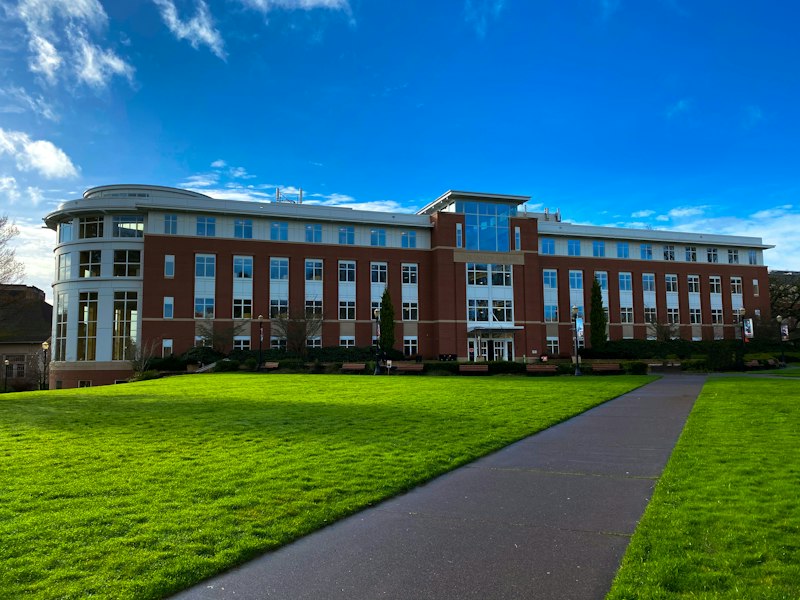
Université de Montréal (UdeM)
Quebec's flagship French-language research university and one of the largest Francophone universities in the world. Renowned for medicine (its affiliated hospital network is one of the largest in Canada), law, arts and sciences, and artificial intelligence (the Montreal Institute for Learning Algorithms, Mila, is headquartered here — the global epicentre of deep learning research).
McGill University
Canada's most internationally recognized university and consistently ranked in the world's top 30. McGill is especially known for medicine, law, music (Schulich School of Music), engineering, and political science. The downtown campus on the slope of Mount Royal is one of the most iconic in North America. McGill has produced more Nobel Prize laureates than any other Canadian university.
Concordia University
An urban, English-language university known for fine arts (the Faculty of Fine Arts is one of the largest and most respected in North America), business (John Molson School of Business), film studies, engineering, and communications. Concordia's downtown and Loyola campuses reflect the creative energy of Montreal.
Université du Québec (UQ network)
A network of ten institutions across Quebec including UQAM (arts, social sciences, education), UQTR (Trois-Rivières, engineering), and others. UQAM's arts and social science programs are particularly well-regarded in francophone Canada. The UQ network was created to bring university education to regions beyond Montreal and Quebec City.
Université Laval
The oldest French-language university in North America and one of Canada's great research institutions. Laval is known for its law school (the oldest in North America), forestry, agriculture, architecture, and medicine. The sprawling Sainte-Foy campus is a city within a city.
The CEGEP System
Quebec's distinctive Collèges d'enseignement général et professionnel (CEGEPs) are a one-of-a-kind layer in the Canadian education system: mandatory two-year colleges between high school and university. There are 48 public CEGEPs and 25 private colleges. Pre-university CEGEPs prepare students for university admission; technical CEGEPs lead directly to the workforce in fields from nursing to multimedia. This system makes post-secondary education both near-universal and affordable.
Sports Teams & Athletic Culture
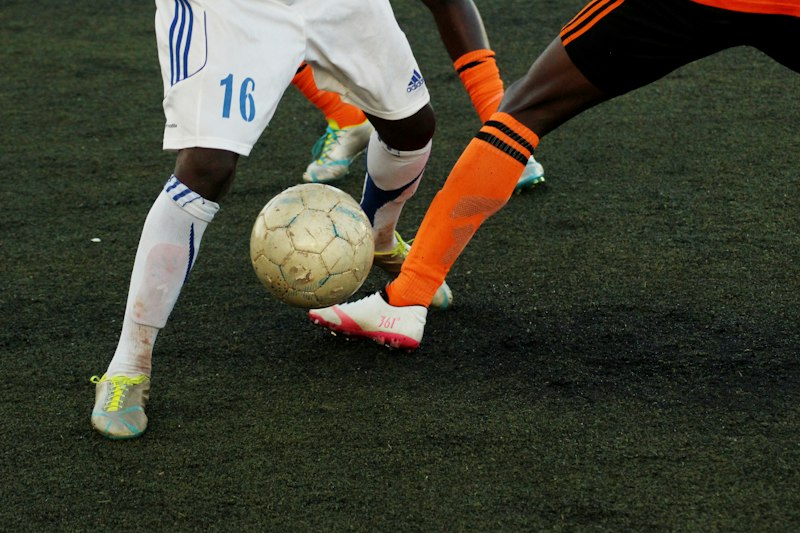
Quebec's relationship with the Montreal Canadiens is one of the most emotionally intense in all of North American sport. The Habs are not just a hockey team — they are a cultural institution bound up with French-Canadian identity.
 HABS
HABS
Montreal Canadiens
Twenty-four Stanley Cup championships — more than any other franchise. The Bell Centre in downtown Montreal is the highest-capacity NHL arena and sells out nearly every night. When the Habs reach the playoffs, the street noise on rue Crescent is audible from blocks away.
 ALS
ALS
Montreal Alouettes
The Als play at Percival Molson Stadium on the McGill campus — a small, steep stadium that holds noise and energy beautifully. They have rebuilt from near-oblivion into a consistent contender and won the Grey Cup in 2023.
 CFM
CFM
CF Montréal
Formerly the Impact, CF Montréal regularly develops players for the Canadian national team. The club draws from the city's large Haitian, Portuguese and Maghrebi communities, giving it a genuinely multicultural fanbase.
 ROCKET
Laval Rocket
The Canadiens' primary development affiliate plays at Place Bell in Laval — a modern purpose-built arena that draws well. Watching the Rocket is the best way in Quebec to see future Canadiens developing in real time.
RMPRTS
Quebec Remparts
The Remparts play at the Videotron Centre in Quebec City — one of the most atmospheric junior hockey venues in the country. The franchise has produced Hall of Famers and is the cultural heartbeat of hockey in the provincial capital.
Culture, Arts & Identity
Quebec has a cultural identity more distinct from the rest of Canada than any other province. French is not just an official language here — it is the language of daily life, commerce, law, entertainment and politics. The Québécois have developed their own literature, cinema, music, comedy and television tradition that is largely invisible to English Canada and genuinely world-class within Francophone culture.
Language and the Quiet Revolution
The Quiet Revolution of the 1960s — the rapid secularization, economic modernization and cultural assertion of Francophone Quebec — transformed the province from a Church-dominated, rural society into a modern, urban, state-directed economy within a generation. Bill 101, passed in 1977, entrenched French as the sole language of work and public signage and remains the most consequential piece of provincial legislation in Canadian history. The language question has shaped every Quebec election since, and the broader Canadian constitutional debates about Quebec's place in Confederation have never been fully resolved.
Montreal: City of Festivals
Montreal hosts more major festivals than any other Canadian city. The Festival International de Jazz de Montréal, held every July, is one of the largest jazz festivals in the world by attendance, drawing over a million visitors to outdoor stages and club venues across the downtown core. The Just for Laughs comedy festival is the largest comedy festival in the world. The Osheaga music festival at Parc Jean-Drapeau is a serious international music event that books headliners who wouldn't have come to Canada a generation ago.
Film and Music
Quebec has a substantial domestic film industry supported by provincial tax credits and the province's distinct cultural identity — French-language films made in Quebec are genuinely different from Anglophone Canadian cinema or French cinema, reflecting a specific North American Francophone experience. Denis Villeneuve (Dune, Blade Runner 2049) learned his craft in Quebec. The Montreal music scene produced Arcade Fire, arguably the most critically acclaimed Canadian band of the 21st century, as well as Leonard Cohen, who was born in the Westmount neighbourhood.
Quebec City and Old World Heritage
Old Quebec is the only walled city north of Mexico, a UNESCO World Heritage Site with buildings dating to the 17th century. The Château Frontenac — technically a hotel, practically a castle — dominates the Upper Town from the cliff above the St. Lawrence. The Winter Carnival, held in January and February, is the largest winter carnival in the world, complete with an ice sculpture competition, canoe racing across the half-frozen St. Lawrence, and a parade with floats made entirely of ice.
Quebec's Hall of Icons
Quebec has produced an extraordinary roster of artists, performers, athletes and political figures whose influence spreads far beyond the province. The cultural infrastructure — French-language broadcasters, the Cirque du Soleil, the National Film Board's Montreal studios, the rich live-music club circuit — has incubated generations of talent that the rest of Canada and the world have eventually noticed.
Céline Dion
The youngest of fourteen children from a small town northeast of Montreal, Dion is the highest-selling Canadian recording artist of all time, with more than 200 million records sold worldwide. Her stiff-person syndrome diagnosis and 2024 documentary I Am: Céline Dion only deepened the public's affection.
Leonard Cohen
Poet, novelist, songwriter, and Montreal's most beloved son. Hallelujah, Suzanne, Famous Blue Raincoat — songs that have outlived nearly every cover. The mural on the Crescent Street side of the building at the corner of St-Laurent is one of Montreal's quiet pilgrimages.
Denis Villeneuve
The director who has quietly become Hollywood's most-trusted hand for serious science fiction: Arrival, Blade Runner 2049, the Dune diptych. His earliest features (Polytechnique, Incendies) were Quebec films first, and his sense of restraint and silence is something he picked up here.
Maurice "Rocket" Richard
The Montreal Canadiens forward who became the first NHL player to score 50 goals in 50 games and a national hero in francophone Quebec. The 1955 riot that followed his suspension is sometimes cited as the first stirring of the Quiet Revolution. His funeral at Notre-Dame Basilica was televised nationally.
Xavier Dolan
The director of Mommy and It's Only the End of the World won the Cannes Jury Prize at twenty-five and the Grand Prix at twenty-seven, the youngest person ever to do so. Dolan started acting as a child, directs in French, and has remained based in Montreal even as Hollywood has tried to move him.
René Lévesque
Wartime correspondent, founder of the Parti Québécois, and the premier who held the 1980 referendum on sovereignty. Lévesque is the central political figure of modern Quebec — his image still appears on murals, T-shirts, and the cover of every history of the province.
Gabrielle Roy
Born in Manitoba but adopted by Quebec; her novel Bonheur d'occasion (translated as The Tin Flute) about the working-class neighbourhood of Saint-Henri remains one of the foundational texts of Canadian literature. She lived in Quebec City for the second half of her life.
Just for Laughs and Cirque du Soleil
Two cultural enterprises that put Montreal on the global map. Cirque du Soleil, founded by Guy Laliberté and Daniel Gauthier in Baie-Saint-Paul in 1984, became the largest live entertainment company in the world. Just for Laughs became the most important comedy festival anywhere. Both grew out of a particularly Québécois tradition of street performance.
Mario Lemieux
One of the few hockey players whose name is mentioned in the same sentence as Wayne Gretzky's. Lemieux led the Pittsburgh Penguins to two Stanley Cups, beat Hodgkin's lymphoma, and later bought the team to keep it from leaving Pittsburgh. He retired with 690 NHL goals.
Regional Cuisine: What Quebec Actually Eats
If any Canadian province has a fully formed national cuisine, it's Quebec. The combination of French culinary roots, a long agricultural history, and a stubborn local food culture has produced a table that travels well — poutine has gone global, smoked meat is internationally recognized, maple syrup defines breakfast on three continents. But the deeper menu is the one Québécois cook at home, and it's worth seeking out.
Poutine
Quebec's defining dish: hand-cut French fries, fresh cheese curds, brown gravy poured hot enough to melt the curds slightly without dissolving them. Born in the rural towns east of Drummondville in the 1950s; perfected by every chip shop and late-night counter since. La Banquise on Rue Rachel in Montreal does 30 versions; Chez Ashton in Quebec City does it best with a Christmas-tipped fork.
Tourtière
The pork-pie of Quebec winter. Spiced ground meat (pork, sometimes pork-and-beef, sometimes game in the Saguenay) baked in a double crust. Served at Réveillon — the long Christmas-Eve dinner — and at every cabane à sucre. The Saguenay-Lac-Saint-Jean version uses cubed meat instead of ground; the Beauce version uses potato; the Montreal version is the most familiar to outsiders.
Smoked Meat
Hand-cured beef brisket, lightly smoked, steamed for hours, sliced thick, piled onto rye with mustard. Schwartz's Deli on Boulevard Saint-Laurent has been the institution since 1928; the Main Deli across the street is where locals go to argue that it's better. A medium-fat sandwich is the right order.
Bagels — Montreal-style
Smaller, denser, sweeter than the New York version, hand-rolled, boiled in honey-water and baked in a wood-fired oven. St-Viateur and Fairmount are the two long-running shops in the Mile End; both are open 24 hours. Eat them warm in the bag, walking. They're never as good cold.
Tarte au Sucre & Maple Everything
Quebec produces about 70 percent of the world's maple syrup, and the cabane à sucre (sugar shack) tradition is a real part of the spring calendar. The lunch is enormous — pea soup, baked beans, oreilles de crisse (fried pork rinds), tourtière, eggs in syrup, ham, sausages, and the dessert is tarte au sucre, a dense maple-sugar pie. Au Pied de Cochon's Sugar Shack is the most famous reservation in the province.
Pâté Chinois
Quebec's shepherd's pie: ground beef, creamed corn, mashed potato, in three perfect strata. A weeknight family staple, an institution in school cafeterias, and a quiet comfort food that tastes like home to anyone who grew up here. The order from bottom to top is non-negotiable.
Top 10 Restaurants in Quebec
Quebec's restaurant culture is the most developed in Canada. Montreal is one of the great food cities of North America, with a depth of bistros, brasseries, ethnic kitchens and serious chef-driven rooms that no other Canadian city approaches. Quebec City has its own quieter scene, more classically French, and the Eastern Townships and Charlevoix add country auberges that take their cooking as seriously as anything in the cities. The list below is ten — five in Montreal, three in Quebec City, two outside — but it could easily be thirty.
Joe Beef
David McMillan and Frédéric Morin's small restaurant in a former bistro on Notre-Dame West is the most-talked-about dining room in the country. The menu is built around Quebec ingredients and changes daily; the wine list is one of the deepest in North America; the room is loud, narrow, and unmistakably theirs. Reservations are weeks out and worth the wait.
Toqué!
Normand Laprise's flagship — a Relais & Châteaux property on Place Jean-Paul-Riopelle in downtown Montreal — has been the city's most-honoured fine-dining room since the 1990s. The kitchen helped invent the entire 'cuisine du marché' movement that has since reshaped Canadian fine dining. The tasting menu is the way to order; the wine cellar is exceptional.
Au Pied de Cochon
Martin Picard's loud, busy Plateau restaurant has been the most-imitated kitchen in the country for over twenty years. The foie gras poutine, the duck in a can, the maple-syrup-soaked desserts — all became regional famous-dishes. The room is loud, the menu is rich, and the experience is unmistakably Québécois.
L'Express
A 1980 bistro on Saint-Denis that has not changed its menu in thirty years and has no reason to. Steak frites, marrow bones, escargots, a long-aged steak tartare, a crème brûlée at the end. The black-and-white checkered floor, the zinc bar, and the bistro chairs are all original. It's the most reliable late-night dinner in the city.
Olive et Gourmando
An Old Montreal bakery-and-café that has been packed for over twenty years. The sandwiches — particularly the Cubain and the smoked-trout — are the day's order; the pastries are made in-house; the soups change daily. There's no dinner service, but the lunch is one of Montreal's defining meals.
Légende
Chef Frédéric Laplante's Quebec City restaurant runs a tasting menu built almost entirely around boreal ingredients — caribou, char, foraged mushrooms, sea-buckthorn berries, sea urchin. The cooking is precise and place-specific in a way that few rooms in the province manage. It's the most ambitious dinner in the city.
Restaurant Initiale
Yvan Lebrun's classic French dining room in Old Quebec has held a strong reputation for over thirty years for its precise, technique-driven cooking and its serious cellar. The room is hushed and adult; the multi-course tasting menus are the signature; the cheese course is a real one, properly served from a cart.
Le Continental
A 1956 white-tablecloth dining room steps from the Château Frontenac, Le Continental runs the kind of tableside-flambé service that most cities have lost — steak Diane, crepes Suzette, Caesar salads tossed in front of you, the works. It's a deliberate piece of theatre and the cooking is, perhaps surprisingly, very good.
Manoir Hovey
A Relais & Châteaux country inn on Lac Massawippi in the Eastern Townships, the Manoir Hovey dining room serves a tasting menu built around the inn's extensive kitchen gardens, the lake's fresh fish, and a serious cellar of Quebec and French wines. The 1899 lakeside building is the romantic-getaway destination of the province.
Auberge des Falaises
In the Charlevoix region two hours north of Quebec City, the Auberge des Falaises dining room overlooks the St. Lawrence River from a clifftop. The Charlevoix terroir is the kitchen's structural advantage — local cheeses, the area's famous lamb, fresh-caught fish — and the cooking is unfussy but careful. The rooms upstairs make it a destination for an overnight.
Whose Land Are You On?
Quebec's Indigenous geography is layered and large. Eleven First Nations and Inuit peoples are recognized in the province; their territories cover the vast majority of Quebec's actual landmass, even though most of the population lives in a narrow band along the St. Lawrence. The names of the rivers, mountains and many of the cities are Indigenous: Quebec ("where the river narrows" in Algonquin), Saguenay, Mauricie, Tadoussac, Chibougamau.
Tiohtià:ke / Montreal
Montreal is known to the Mohawk as Tiohtià:ke — "the place where peoples and nations gather." It sits within the Haudenosaunee (Iroquois) Confederacy's traditional territory, immediately downstream from the Mohawk communities of Kahnawà:ke and Kanesatake. The 1990 Oka Crisis at Kanesatake, a 78-day standoff over the expansion of a golf course onto contested Mohawk land, was a turning point in modern Canadian Indigenous politics. The McCord Stewart Museum in Montreal has a strong Indigenous collection and active First Nations curatorship.
Eeyou Istchee — The James Bay Cree Territory
Northern Quebec is Eeyou Istchee — the territory of the Cree of James Bay, who in 1975 signed the James Bay and Northern Quebec Agreement, the first modern treaty in Canadian history. The agreement created the Cree Regional Authority, gave the Cree control over health, education and policing in their nine villages, and established a governance model that has shaped every modern treaty since. Cree Outfitting and Tourism Association manages cultural tourism out of Mistissini and Waskaganish.
Nunavik — Inuit Quebec
The Inuit territory of Nunavik covers the northern third of Quebec — almost a third of the province. Fourteen Inuit villages along the Hudson Bay and Ungava Bay coasts, all of them accessible only by air or summer sealift. Kuujjuaq is the regional centre. Avataq Cultural Institute and the Nunavik Tourism Association are the best portals for travel that respects the communities' wishes about how visitors arrive.
Wendake & Innu Country
Wendake, the Wendat (Huron) Nation reserve just outside Quebec City, is one of the most accessible First Nations cultural visits in the country. The Hôtel-Musée Premières Nations is a hotel, museum and restaurant in one, with traditional Wendat cuisine on the menu. The Innu communities of the North Shore (Mashteuiatsh, Essipit, Pessamit, Uashat mak Mani-Utenam) sit along the St. Lawrence between Tadoussac and Sept-Îles and have a growing cultural-tourism programme.
Your Best 5-Day Stay in Quebec
Five days in Quebec splits naturally between Montreal, Quebec City, and the country in between. The itinerary below assumes you fly into YUL, take the train (or a rental car) to Quebec City, and return to Montreal for a final flight home. The drive between the two cities along the St. Lawrence is one of the most beautiful in eastern Canada; the train is cheaper and frees you to sleep.
Montreal — The Plateau, Mile End, Old Montreal
Coffee at Olive et Gourmando in Old Montreal. Walk the cobblestones of Rue Saint-Paul; visit the Notre-Dame Basilica (the AURA light show in the evening is worth the ticket). Lunch in Chinatown or a smoked-meat sandwich at Schwartz's on the Main.
Afternoon: bike the Mile End and the Plateau. Bagel at St-Viateur, a flat white at Café Olimpico. Up Mount Royal at sunset for the city view. Dinner at Joe Beef on Notre-Dame, or — if you can't get a reservation — Liverpool House next door (same family). End the night with a jazz set at Diese Onze.
Montreal — Old Port, Markets, and the Olympic Stadium
Morning at the Jean-Talon Market in Little Italy — produce, charcuterie, the small épiceries fines that supply the city's restaurants. Lunch on the spot. Afternoon: Botanical Gardens and the Olympic Park, with the funicular ride up the Tour de Montréal for the view.
Late afternoon: the Atwater Market for an aperitif at one of the bars on the canal. Dinner in Saint-Henri (Tuck Shop or Foiegwa) or in Little Burgundy (Le Vin Papillon's tapas room). Walk the Lachine Canal home in the long summer dusk.
Train to Quebec City — Old Quebec on Foot
Via Rail's morning train from Montreal Central to Quebec City Gare du Palais (3 hours, scenic). Drop bags at a hotel inside the walls — the Auberge Saint-Antoine in the Lower Town is the romantic pick. Walk the Petit Champlain quarter (the oldest commercial street in North America), take the funicular up to the Château Frontenac, and stroll the Dufferin Terrace boardwalk above the river.
Lunch at Le Continental, in business since 1956 and serving the kind of tableside flambé that Montreal abandoned forty years ago. Afternoon: the Plains of Abraham, the Citadel guided tour, and a long walk through the artist quarter on Rue Saint-Jean. Dinner at Légende, the regional-cuisine restaurant of the Boréal Bistro group, or the more casual Chez Boulay.
Île d'Orléans, Montmorency Falls, Wendake
Morning: drive (or rent for the day) out to Montmorency Falls — taller than Niagara, less crowded, with a footbridge over the lip and a cable car up the side. Continue to Île d'Orléans for an island loop drive: cider houses, strawberry farms, the village of Sainte-Famille, the chocolatier in Saint-Pierre.
Afternoon: Wendake, the Wendat Nation reserve north of the city. Tour the Hôtel-Musée Premières Nations, walk the Onhoüa Chetek8e traditional site, and stay for a tasting menu of contemporary Indigenous cuisine at La Traite. Drive back to Quebec City for a quiet evening on the terrace at the Bistro 1640.
Charlevoix & Back to Montreal
If you have a car: drive Highway 138 northeast from Quebec City along the St. Lawrence into Charlevoix. Stop at Baie-Saint-Paul (the birthplace of Cirque du Soleil, with a museum to prove it), continue to La Malbaie for lunch overlooking the river, and turn back. The valley is one of UNESCO's biosphere reserves and the most painted landscape in eastern Canada.
If you're train-bound: take the morning train back to Montreal, with an afternoon at the Musée des beaux-arts and dinner near the Bell Centre before a late flight out of YUL. Either way, the postcard image you'll keep is the St. Lawrence narrowing past Cap Tourmente at sunset.
Five Days in Montreal
Montreal is the largest French-speaking city in the Americas, an island bisected by Mount Royal, and a place that genuinely lives the seasons it gets. Five days here covers the Vieux-Port, Mount Royal, the Plateau, Mile End, the Olympic Park, the Underground City, and at least one festival or game depending on when you arrive. Stay in the Plateau or Mile End for neighbourhood character; downtown for the Bell Centre and the metro convenience.
Vieux-Montréal & the Old Port
Start in Vieux-Montréal — the 17th and 18th century stone-walled streets that cluster around Place d'Armes. Notre-Dame Basilica's blue-and-gold interior is the most photographed church interior in Canada; pay the small entry fee and stay for the Aura light show in the evening if it's running. Lunch at Olive et Gourmando on rue Saint-Paul (the muffuletta and the truffle macaroni are the moves).
Walk down to the Old Port for an afternoon along the river — the Grande Roue Ferris wheel for the view, the Bota Bota spa-boat for an indulgence, or simply the boardwalk and the Cirque du Soleil tent if it's pitched. Dinner at Toqué! on Place Jean-Paul-Riopelle, where Normand Laprise's tasting menu has held the city's high-end dining throne for thirty years.
Mount Royal, the Plateau & Schwartz's
Climb Mount Royal in the morning — the Olmsted Trail from avenue du Parc is the easy version; the staircase straight up from rue Peel is the punishing one. The Belvedere Kondiaronk overlook gives you the full island skyline and, on a clear day, the green dome of Saint Joseph's Oratory in the distance. The Mountain View café up top is fine for coffee.
Descend through the Plateau Mont-Royal — the wrought-iron staircase neighbourhood that Mordecai Richler and Leonard Cohen lived in. Lunch at Schwartz's Deli on the Main for the smoked-meat sandwich; there is no substitute. Afternoon shopping along Saint-Laurent and Saint-Denis. Dinner at Joe Beef in Little Burgundy if you've planned ahead; otherwise, Lawrence in Mile End.
Olympic Park, Botanical Garden & the Biodome
Take the green line to Pie-IX. The Olympic Stadium tower — the world's tallest inclined tower at 165 metres — has a funicular that runs to a top observation deck. The stadium itself, half white elephant and half period piece, hosts the rare event and a guided tour that's better than expected.
Across the boulevard, the Montreal Botanical Garden is one of the world's three great municipal gardens (Kew and Berlin are the company). The Chinese Garden, the First Nations Garden, and the Insectarium each warrant an hour. The Biodome next door, a refit of the velodrome, packs four ecosystems into one building. Dinner back in the Plateau at Au Pied de Cochon for the foie-gras-on-foie-gras menu Anthony Bourdain made famous.
Mile End, Little Italy & the Bagel Wars
Mile End is the immigrant-and-artist neighbourhood that produced Arcade Fire, Win Butler, the Plateau's hipster diaspora, and bagels that Montrealers will fight you over. Breakfast at St-Viateur Bagel Café (the older, more austere of the two great bakeries; Fairmount is the other, two blocks south). Coffee at Café Olimpico on rue Saint-Viateur — a Sicilian institution.
Walk into Little Italy for an afternoon at the Jean-Talon Market, the largest open-air market in North America. The Italian, Polish, Portuguese, and Lebanese delis around it are the underrated heart of Montreal eating. Dinner at Lemeac on avenue Laurier — the half-price after-10-p.m. menu is one of the city's best-known secrets.
Underground City, Museums & Departure
The Réso — Montreal's 33-kilometre Underground City — connects most of downtown without ever stepping outside. Use it to reach the Musée des beaux-arts on Sherbrooke (Canadian, Indigenous, and a strong Quebec collection) and the McCord Stewart Museum across the street (social history of the city, the wampum belts, and the photographic archive of Notreau Frères).
Brunch at Marché Artisans inside the Fairmont Queen Elizabeth before the airport run. YUL is 25 minutes from downtown by the 747 express bus. If your flight is in the evening, save an hour for Schwartz's takeout for the road; nothing else in the country eats like it cold the next morning.
Five Days in Quebec City
Quebec City is the only walled city north of Mexico and the small, fortified, eternally photogenic capital of la Belle Province. Five days here covers the Old Upper and Lower Towns, the Plains of Abraham, Île d'Orléans, Montmorency Falls, and a Charlevoix day trip. Stay inside the walls in Vieux-Québec for the cobblestones, or in Saint-Roch for the contemporary edge — both are walkable and cab-friendly.
Vieux-Québec & the Château Frontenac
Stay at, or pretend to stay at, the Fairmont Le Château Frontenac — the most photographed hotel in the world. The Dufferin Terrace boardwalk wrapping its base is the best free attraction in the city. Walk down the Breakneck Stairs (Escalier Casse-Cou) to the Quartier Petit Champlain, the cluster of 17th-century stone houses that's been rated North America's best shopping street more than once.
Lunch at Le Lapin Sauté for the rabbit poutine, which is exactly as good as it sounds. Afternoon walk along the city walls and through Place Royale, the literal birthplace of French civilisation in North America. Dinner at Aux Anciens Canadiens, in the oldest house in the city (1675), for tourtière, ragoût and pea soup served by waiters in period costume — the room is touristy and the food is genuinely good.
The Plains of Abraham & the Citadelle
The Citadelle of Quebec is the largest British-built fortress in North America still in active military use; the changing-of-the-guard ceremony runs daily in summer. Allow two hours. The Plains of Abraham (Battlefields Park) — where Wolfe and Montcalm both died in 1759 in 30 minutes of fighting that remade the continent — is now an enormous urban park.
Lunch at Le Cochon Dingue on Champlain. Afternoon at the Musée national des beaux-arts du Québec on the western edge of the Plains, particularly its Inuit and contemporary Quebec collections. Dinner at Légende, a kilometre-zero restaurant working entirely with provincial ingredients.
Montmorency Falls & Île d'Orléans
Drive 15 minutes north to Montmorency Falls — at 83 metres, taller than Niagara and considerably less commercialised. The cable car runs to the top; the suspension bridge crosses the lip of the falls; the panoramic stairway runs alongside. Allow two hours.
Continue across the bridge to Île d'Orléans — the agricultural island in the St. Lawrence that Quebec City's restaurants source from. Drive the perimeter road (one road, 67 km, no traffic) stopping at cassis producers, cider mills, strawberry stands and the chocolatier at Sainte-Pétronille. Dinner at Le Saint-Amour back in the Old City — old-school refinement, a 12,000-bottle cellar, and a quiet courtyard for dessert.
Saint-Roch, Lower Town & the Wendake Side Trip
Saint-Roch is Quebec City's contemporary neighbourhood — the formerly working-class lower district that's been remade by tech offices, breweries and a strong indie restaurant scene. Brunch at Buvette Scott. Walk rue Saint-Joseph for the bookstores and the design shops.
Drive 20 minutes north to Wendake, the urban Huron-Wendat reserve. The Hôtel-Musée Premières Nations is the cultural anchor — a hotel, museum and restaurant complex that's the most-thoughtful Indigenous-led tourism site in eastern Canada. Lunch at La Traite, the museum's restaurant. Back in town, dinner at Chez Boulay-bistro boréal on rue du Parloir, where the menu draws on northern Quebec ingredients (sea buckthorn, Labrador tea, smoked sturgeon).
Carnaval (or Summer Walk) & Departure
If you've come in late January or early February, Carnaval is the visit's whole point: ice palace, snow sculptures, canoe races on the frozen St. Lawrence and Bonhomme presiding over the whole thing. Outside Carnaval season, take the morning to revisit a favourite — the terrace, the Petit Champlain, the Plains.
Brunch at Le Clocher Penché in Saint-Roch. The airport (YQB) is 25 minutes west. If you have an extra hour and a car, the drive back via Highway 138 along the river adds little time and gives you a final view of Cap Tourmente as you go.
Commerce & Industry
Quebec's economy is the second-largest in Canada, accounting for roughly 20 percent of national GDP, and it operates by a set of rules — economic, linguistic, cultural — that distinguish it sharply from the other provinces. The state plays a larger role here than anywhere else in Canada: Hydro-Québec, the Caisse de dépôt et placement du Québec, the Société Générale de Financement, and a web of provincial crown corporations and investment vehicles have shaped the economy in ways that reflect Quebec's particular political culture. The results are impressive on several metrics: Quebec has built world-competitive industries in aerospace, aluminum, and artificial intelligence that would not exist without deliberate state direction.
1. Aerospace
Montreal is the third-largest aerospace cluster in the world — after Los Angeles/Seattle and Toulouse — and the undisputed aerospace capital of Canada. Bombardier designs and builds business jets in its Montreal plants. CAE is the global leader in flight simulation technology. Pratt & Whitney Canada, headquartered in Longueuil, makes turboprop and turbofan engines for regional and business aircraft used around the planet. Bell Textron, Airbus, Rolls-Royce, and hundreds of suppliers and MRO firms complete an ecosystem that employs more than 40,000 Quebecers in high-wage, technically skilled jobs.
2. Hydroelectric Power
Hydro-Québec is one of the world's largest hydroelectric utilities and the single most important public asset the Quebec state controls. Its installed capacity exceeds 37,000 megawatts, generated by 63 large hydroelectric stations on the rivers of the Canadian Shield. The system exports several billion dollars worth of electricity annually to New England, New York, and Ontario, providing a revenue stream that has financed the province's comparatively lower electricity rates. Those rates are among the lowest in North America and are a significant competitive advantage for industries — aluminum smelters, data centres, cryptocurrency mining operations — that consume electricity at industrial scale.
3. Financial Services & Investment Management
The Caisse de dépôt et placement du Québec (the Caisse) manages more than $420 billion in assets — a sum that makes it one of the ten largest pension fund managers in the world — and invests strategically to develop Quebec's economic interests as well as generate returns. The Montreal Exchange, part of the TMX Group, specializes in financial derivatives. National Bank of Canada, headquartered in Montreal, is Canada's sixth-largest bank and a major employer. The financial ecosystem around these institutions — investment banking, wealth management, private equity — is substantial.
4. Artificial Intelligence & Technology
Montreal has become one of the world's premier artificial intelligence research hubs, anchored by the Mila institute (founded by Yoshua Bengio, winner of the 2018 Turing Award, often described as the "godfather of deep learning") and the research departments of Google Brain, Microsoft Research, Samsung AI, Facebook AI Research, and dozens of other global tech firms who have established Montreal offices to recruit from Mila's talent pool. Startups like Element AI (since acquired by ServiceNow), Coveo, and Lightspeed have emerged from this ecosystem. McGill University, the Université de Montréal, and Polytechnique Montréal are the educational anchors.
5. Aluminum Smelting
Quebec's cheap, clean hydroelectricity makes it one of the most cost-competitive aluminum smelting locations in the world. Aluminerie Alouette at Sept-Îles is the largest aluminum smelter in the Americas. Alcoa, Rio Tinto, and Hydro operate additional smelters in Jonquière (Arvida), Shawinigan, and Deschambault. The aluminum sector employs thousands of skilled workers in regions — Saguenay–Lac-Saint-Jean, Côte-Nord — where few comparable employment options exist.
6. Pharmaceuticals & Life Sciences
Montreal is Canada's pharmaceutical capital. Pfizer, Sanofi, AstraZeneca, Merck, Bayer, and Boehringer Ingelheim all operate manufacturing or R&D facilities in the Montreal area. The IRICoR clinical research consortium, the Montreal Neurological Institute (the Neuro, at McGill), and the Institut de Recherches Cliniques de Montréal are nodes of a life sciences cluster that generates significant intellectual property and high-skill employment.
7. Agriculture — Maple Syrup & Beyond
Quebec produces approximately 70 percent of the world's maple syrup supply — a near-monopoly enforced partly by geography (the maple forests of the Laurentians and the Eastern Townships produce syrup of a quality that cannot be replicated in Vermont or New Brunswick), partly by the Federation of Quebec Maple Syrup Producers' cartel-like management of the global reserve, and partly by sheer scale. Beyond maple, Quebec is a major producer of pork, dairy, vegetables (greenhouse and field), apples, blueberries, cranberries, and wine from the Eastern Townships appellation.
8. Tourism
Quebec City's walled Old Town — the only fortified city north of Mexico — draws millions of visitors per year. Montreal is Canada's most cosmopolitan city and the one most likely to genuinely surprise a first-time visitor with its restaurant scene, its festivals (Just for Laughs, the Jazz Festival, Osheaga), its architecture, and its neighbourhood distinctiveness. The Laurentians, Mont-Tremblant, the Eastern Townships, the Gaspésie, and the Île d'Orléans add tourism layers that extend across the province's enormous geography.
9. Mining
The Abitibi-Témiscamingue region hosts one of the world's great gold mining districts — the Val-d'Or–Rouyn-Noranda corridor has produced more than 100 million ounces of gold since the 1920s. The Côte-Nord produces iron ore and titanium. The James Bay lowlands hold lithium and graphite deposits that are increasingly important to the battery supply chain. Agnico Eagle, Osisko, and Eldorado Gold are among the major operators.
10. Forestry
Quebec has more commercially forested land than any other province. Resolute Forest Products, Produits forestiers Résolu, Domtar (now owned by Paper Excellence), and dozens of smaller mills produce lumber, softwood pulp, newsprint, and specialty papers from a boreal forest that stretches from the Laurentians to the subarctic. The forest industry employs tens of thousands in the Saguenay, Côte-Nord, and Abitibi regions where few alternatives exist, making forestry policy — harvesting levels, protected areas, First Nations consultation — a matter of genuine political consequence.
Politics
Quebec's political culture is unlike any other in Canada and frequently misunderstood by the rest of the country. The province's defining political axis is not left-right but nationalist-federalist — the question of Quebec's relationship to Canada, its cultural and linguistic distinctiveness, and its demand for recognition as a nation within a nation has structured provincial and federal politics for more than sixty years. The Parti Québécois and successive sovereigntist waves lost the 1980 and 1995 referendums, but the question of Quebec identity never went away; it simply found a new vehicle in the Coalition Avenir Québec.
The Coalition Avenir Québec & Premier François Legault
François Legault founded the CAQ in 2011 after breaking from the PQ over sovereignty — he had concluded that pursuing independence was a strategic dead end and that Quebec nationalists could achieve more within Confederation by exercising maximum provincial autonomy than by continuing to fight a referendum they could not win. The CAQ won its first majority in 2018 and won a second, larger majority in October 2022, consolidating its position as the dominant party in Quebec provincial politics.
Legault's government has pursued an assertive Quebec nationalism without the separatist endgame. The most significant legislation of the Legault era is Bill 96 — the Act respecting French, the official and common language of Québec — which extended French language requirements into post-secondary education, required new immigrants to communicate with the government in French after six months, strengthened francophone consumer rights, and limited access to English-language services in regions with small anglophone populations. The law is the most significant expansion of French language policy since Bill 101 in 1977, and it has been deeply controversial — challenged in court by anglophone community groups and criticized internationally as disproportionate — while also being genuinely popular among the francophone majority.
The CAQ has also moved aggressively to limit immigration, arguing that Quebec's integration capacity is saturated and that higher immigration levels threaten French language vitality. On economic policy, the CAQ is centre-right: it has reduced income taxes, invested in northern resource development, and supported Hydro-Québec's expansion plans. On social policy, Legault's instincts are conservative but pragmatic — universal $10-a-day daycare (the envy of every other province) predates the CAQ and has been maintained. The Quebec Liberal Party forms the official opposition, now drawing its support almost entirely from the anglophone and allophone communities that have defected en masse from the CAQ's nationalism. The PQ under Paul St-Pierre Plamondon holds a handful of seats and continues to advocate sovereignty; Québec solidaire, a left-sovereigntist party, holds urban Montreal ridings and speaks to younger, progressive Quebecers who find both the CAQ and the traditional PQ insufficiently radical.
A Poem for Québec
Un poème pour la belle province
The river is the story — always was.
The St. Lawrence carries it from Cartier
through Champlain, through the years that gave
New France its shape before it slipped away

to English siege and treaty. What remained
was language — stubborn as the limestone walls
of Québec City, as the faith sustained
in parish churches through the corridors

of winter. The fleur-de-lis still flies
above the National Assembly, proud
as any flag that navigates the skies
between identity and the crowd.

Montréal puts jazz and poetry into the street —
the Main divides its layers east from west,
the bagel smoke and poutine and the beat
of clubs on Crescent and St-Laurent dressed

in neon, both official languages
at once, and neither quite in charge.
The island city lives in its own edges,
its own logic, its own beautiful discharge

of energy. And east of it, the farms
of the Laurentian lowlands keep their rows
of maple and of corn. The Townships' charms
are English-tinged and pastoral. The snows

come deep at Lac-Saint-Jean, where Péribonka
holds the river and the blueberry coast.
The north holds iron ore and hydropower —
the waterfalls of what the province boasts

most quietly: the rivers in their force,
the lakes, the boreal beyond the last
transmission line. Québec has stayed its course
through everything. The future rhymes its past.
Airports & Getting There
Quebec is served by an airport network that reflects the province's geography and its particular position in trans-Atlantic aviation. Montreal is one of the primary gateways between Europe and North America — a hub role it has held since the jet age began — and the airport handles a volume and variety of international traffic that surprises visitors who arrive expecting a regional facility. Further along the St. Lawrence, Quebec City has its own well-run airport that has grown its direct service considerably. And the further you get from the river corridor, the more essential aviation becomes: Saguenay, the Gaspé and the northern communities depend on scheduled air service in ways that southern Quebec residents rarely have to think about.
▶ Watch: MONTREAL Travel Guide 2024 — Top Things To Do [4K] — Ryan Shirley
Montréal-Trudeau International Airport
Montréal-Pierre Elliott Trudeau International Airport (YUL) is Air Canada's second-largest hub after Toronto Pearson and handles roughly 20 million passengers per year. The airport's trans-Atlantic reach is substantial: Air Canada operates daily non-stop service to London Heathrow, Paris CDG, Frankfurt, Zurich, Geneva, Brussels, Rome and Lyon among others, and Air Transat — a Montreal-based leisure carrier — fills in routes to Manchester, Edinburgh, Bordeaux, Porto and a range of seasonal Mediterranean destinations. Corsair, French Bee and other French carriers add capacity on the Paris route. Flying from Paris to Montreal takes about seven hours eastbound and eight or nine westbound. From London it's seven hours. From New York it's barely over an hour.
Getting from YUL into downtown Montreal has historically been the airport's one significant weakness — there is no rapid rail link. The main option is the 747 express bus operated by the STM, which runs 24 hours a day, costs $11 (a regular bus fare plus a supplement), and reaches downtown in 45–65 minutes depending on traffic. A taxi or Uber runs $45–55. The long-awaited REM (Réseau express métropolitain) light rail network was supposed to include an airport branch, and that connection is under development — when complete it will significantly improve the trip.
Québec City Jean Lesage International Airport
Québec City Jean Lesage International Airport (YQB) has grown considerably since the early 2000s, when it was primarily a domestic-only facility. Today it handles direct flights from Toronto, Montreal, Ottawa, Calgary and Vancouver on Air Canada and WestJet, and in recent years has added seasonal non-stop service to Paris, London, Cancun, Punta Cana and several Florida airports. The airport is about 16 kilometres west of Old Quebec City, and a taxi or rideshare into the historic district costs around $35–45. It is a compact and functional airport — the kind where you can realistically arrive 60 minutes before a domestic departure and not be stressed about it.
Regional Airports
Mont-Tremblant International Airport (YTM) in the Laurentians operates primarily as a charter and seasonal facility, with US ski market carriers bringing packages flights from Boston, New York and other northeastern cities during the winter season. It is not a hub for independent travelers but it enables the ski resort economy that surrounds it. Bagotville Airport (YBG) near Saguenay serves the region via Air Canada Express routes connecting to Montreal and occasionally further afield. For anyone traveling to the Saguenay–Lac-Saint-Jean region — a part of Quebec well worth visiting and genuinely off most tourist routes — Bagotville is the practical entry point. There are also scheduled services to Sept-Îles (YZV) and Rouyn-Noranda (YUY) for those heading into the province's resource-industry north, where Air Creebec operates routes into Cree communities along James Bay.
Cost of Living & Housing
Quebec has for decades maintained a cost of living that is lower than comparable Canadian provinces, a fact that Quebecers are aware of and that influences provincial politics in ways that outside observers sometimes miss. The combination of heavily subsidized childcare (the $10-a-day daycare system), relatively controlled rent growth, lower home prices than Toronto or Vancouver, and a range of provincial subsidies has made Quebec — particularly Montreal — an attractive destination for Canadians from higher-cost provinces looking to stretch their income. The housing market tightened significantly during 2021–2022 as remote workers from other provinces discovered what Montrealers had quietly known, but prices remain meaningfully lower than Ontario's major cities.
Montreal
Montreal is one of the more affordable major cities in North America for its size and cultural offering. A one-bedroom apartment in a central neighbourhood — the Plateau, Mile End, Rosemont, Villeray, Notre-Dame-de-Grâce — averages $1,400–1,900 per month in 2024–2025. Two-bedroom units in those same areas run $1,800–2,500. The Plateau-Mont-Royal, which is the neighbourhood most associated with the Montreal "brand" — outdoor staircases, duplexes, café terrasses — sits at the higher end, but areas like Rosemont-La Petite-Patrie and Villeray offer very similar architecture and urban texture for less. Quebec has a strong tenants' protection framework under the Tribunal administratif du logement (formerly the Régie du logement), with rules governing allowable rent increases that have historically kept the rental market more stable than in other Canadian provinces. The flip side is that landlords in the current market often prefer voluntary turnover, and finding an available unit can take effort even when prices seem reasonable by comparison.
Buying a property in Montreal is considerably more accessible than in Toronto. The median price for a single-family home in Montreal census metropolitan area was around $550,000–650,000 in 2024, though individual neighbourhoods vary significantly. A plex — the Montreal duplex or triplex that is the city's architectural signature — is a popular purchase for first-time buyers who can offset mortgage costs by renting one or two units. A triplex in Rosemont in reasonable condition might sell for $900,000–1.2 million, but the rental income from two units covers a meaningful portion of carrying costs. Groceries in Montreal are comparable to other Canadian cities; the Jean-Talon and Atwater markets offer excellent fresh produce at competitive prices. A monthly STM transit pass costs $100 ($94 with the annual Opus card), one of the lowest prices among major Canadian transit systems.
Quebec City
Quebec City is cheaper than Montreal by a meaningful margin, and the gap between what you pay and what you get in quality of life is arguably the best in Canada. A one-bedroom in the city — whether in the Montcalm neighbourhood near the Plains of Abraham or in the Limoilou district east of the old city — runs $1,100–1,500 per month. Two-bedroom apartments are available in the $1,400–1,900 range. The housing stock in Quebec City includes a lot of older stone and brick construction that is charming and often drafty in winter, and utility costs can be higher per square metre in a poorly insulated building. The city's public transit is less developed than Montreal's, and many Quebec City residents own cars; parking, however, is cheaper and easier than in Montreal. Home prices in Quebec City are even more accessible than Montreal: a detached home in a suburban neighbourhood sells for $350,000–500,000, and the city has not seen the same speculative pressure.
Climate & Seasonal Weather
Quebec's climate is shaped by three forces: the Atlantic Ocean to the east, the vast cold interior of the Canadian Shield to the north, and the St. Lawrence River corridor that channels both weather systems and human settlement. The result is a province where climate varies enormously — from the relatively mild winters of Montreal, moderated somewhat by its urban heat and its position in the St. Lawrence Valley, to the harsh subarctic conditions of Ungava and Nunavik in the far north, where the treeline gives way to tundra and winter temperatures routinely reach -40°C. Most visitors experience the climate of the southern corridor, and that is what this section addresses, with notes on the regions that differ most markedly.
Winter: Cold, Snow and the Culture That Grew Around It
Montreal winters are cold but not as cold as many non-Canadians imagine. January averages around -10°C, with wind chill frequently pushing the felt temperature to -20°C or colder. Snowfall is substantial — Montreal receives around 210 centimetres annually — but the city is exceptionally well-adapted to it. The underground city (RÉSO), a 33-kilometre network of climate-controlled tunnels connecting Metro stations, shopping centres, hotels and office towers, allows a significant portion of the downtown working population to commute, shop and eat without setting foot outside in January. The city also plows its roads aggressively and quickly by the standards of most North American cities. Quebec City winters are harder: Quebec City averages closer to -12°C in January and receives even more snow than Montreal, sometimes dramatically so. The city hosts the winter carnival (Carnaval de Québec) in late January and early February specifically because it embraced winter rather than apologizing for it — the parades, ice sculptures, outdoor bars, and canoe race across the ice-filled St. Lawrence are a direct expression of that approach.
For winter visits, dress in proper layers: a wool or synthetic base layer, a fleece or down mid-layer, and a windproof outer shell rated for -20°C or below. Waterproof insulated boots are mandatory. Montreal's terrasses (outdoor restaurant patios) increasingly operate year-round with propane heaters, and the city's winter nightlife — packed into warm bars and restaurants — is one of its genuine pleasures.
Summer and the Best Season to Visit
Montreal summers are warm, often humid, and genuinely festive. July averages around 26°C, with spells above 30°C common and the humidity off the St. Lawrence making those days feel hotter. The city's outdoor culture — parks, terrasses, cycling on the extensive bike lane network, jazz festival in late June, Just for Laughs in July — is calibrated to these months. The Mont-Royal park fills with people on summer weekends; the Tam-Tams drum circle on Sunday afternoons around the George-Étienne Cartier monument has been a Montreal institution since the 1970s. June and September are arguably the most comfortable months: warm without being oppressive, and without the full crush of the tourist peak. The Laurentians north of Montreal green up by late May and the hiking season runs through October.
Quebec City's summer is similar in temperature but the old city takes on a particular character: the stone walls and the fortifications warm slowly in the sun, the Place Royale fills with tourists and street performers, and the Festival d'été de Québec in mid-July brings large outdoor concerts to the Plains of Abraham for ten days. Fall colour in the Quebec City region — particularly in the Charlevoix and along the Côte-de-Beaupré — is spectacular and peaks around the first two weeks of October. The Appalachian foothills of the Eastern Townships south of Montreal also produce excellent fall colour, and the wine and cider route through Dunham and Frelighsburg is at its best in October.
Provincial Healthcare & Documentation
Quebec's public health insurance system is administered by the Régie de l'assurance maladie du Québec, known universally as the RAMQ. Like its counterparts in other provinces, RAMQ covers medically necessary hospital services, physician visits, and most diagnostic procedures at no direct cost to eligible residents. The card issued to registrants — also called the RAMQ card — functions as the proof of coverage presented at every medical encounter in the province. What distinguishes Quebec's system from most others in Canada is the mandatory prescription drug insurance component: all Quebec residents must have drug coverage, either through a private group plan (typically employer-provided) or through the RAMQ public drug plan, which charges premiums based on income.
The Three-Month Wait and Registration
Like Ontario's OHIP, RAMQ coverage is not immediate for new residents. Persons arriving from other Canadian provinces typically face a three-month waiting period. Immigrants and temporary residents face eligibility rules that depend on their specific immigration status — some categories, such as refugee claimants and certain temporary foreign workers, may be eligible for coverage sooner under specific provisions, while others must wait the standard period. During any waiting period, private health insurance is essential. The cost of an uninsured emergency room visit or hospitalization in Quebec can reach thousands of dollars, and provincial hospitals are not required to waive fees for uninsured patients.
To register for RAMQ, new residents submit an application online or by mail to the RAMQ with documentation establishing identity, Quebec residency and, for non-citizens, immigration status. A permanent resident card, Canadian passport or other recognized identity document is required, along with proof of address in Quebec (utility bill, lease, bank statement). The RAMQ card arrives by mail. Until it does, RAMQ issues a confirmation letter that most health providers will accept. The mandatory prescription drug coverage question needs to be resolved at registration: if your employer provides a private group plan, you declare it and are exempt from the RAMQ drug plan. If not, you are automatically enrolled in the public plan and pay premiums accordingly.
Accessing Care and Known Gaps
Quebec has a pronounced family physician shortage, arguably more acute than Ontario's. The province estimates that more than one million Quebecers — roughly one in nine — do not have a regular family doctor and are on a waiting list through the Guichet d'accès à la clientèle orpheline (GACO), the province's centralized waitlist for unattached patients. Access to a family physician through this list can take months to years depending on region. In response, the province has expanded the role of nurse practitioners (infirmières praticiennes spécialisées) and Groupes de médecine de famille (GMF), which are family medicine groups where teams of physicians and other health professionals provide primary care. Walk-in clinics (cliniques sans rendez-vous) are widely used for non-emergency acute care. The CLSC network — Centres locaux de services communautaires — provides community-based health and social services across the province and is a first point of contact for many services including prenatal care, home care for the elderly, and mental health referrals.
Specialist wait times in Quebec are significant for non-urgent cases. Elective surgeries, specialist referrals and certain diagnostic imaging can involve waits measured in months. Emergency care at major hospitals — the McGill University Health Centre and Centre hospitalier de l'Université de Montréal in Montreal, the CHU de Québec–Université Laval system in Quebec City — is generally of high quality, but emergency room wait times for non-critical cases are long. Dental care is not covered by RAMQ for most adults, as in other provinces. Vision care for adults over 18 is covered for certain conditions only. Newcomers relying solely on RAMQ coverage without supplementary insurance or employer benefits should plan for meaningful out-of-pocket costs in dental and vision.
Outdoor Activities & Provincial Parks
Quebec's outdoor geography is staggering in scale. The province is three times the size of France and most of it is essentially wilderness — boreal forest, lakes, rivers, wetlands and, in the far north, tundra and permafrost. The Sépaq network, Quebec's provincial parks agency, manages 24 national parks and 14 wildlife reserves covering millions of hectares, with a quality of maintained infrastructure — hiking trails, camping facilities, interpretation centres — that makes the parks accessible without requiring serious backcountry experience. For those who do have that experience, the canoe routes and wilderness areas available in Quebec are among the most extensive in Canada.
▶ Watch: Visit Canada — Montreal and Quebec City Guide — Expedia
Mont-Tremblant and the Laurentians
Parc national du Mont-Tremblant is the oldest and most visited provincial park in Quebec, established in 1895 and covering 1,510 square kilometres of the Laurentian Mountains. In summer it offers 400 kilometres of hiking trails, 100 kilometres of canoe routes linking the park's many lakes, and camping ranging from basic wilderness sites to ready-to-camp OTEM units (the Quebec equivalent of glamping). In winter the park is used for snowshoeing and cross-country skiing. Adjacent to but separate from the park, the Mont-Tremblant ski resort is the largest ski area in eastern Canada, with 102 runs, a vertical drop of 645 metres, and a pedestrian village at its base that is busy year-round with visitors. The combination of the park and the resort makes the Tremblant region the most developed outdoor destination in Quebec, with corresponding prices: a weekend at Tremblant in February, including lodging, ski passes and meals, is expensive by any Canadian standard.
Gaspésie and the Eastern Parks
Parc national de la Gaspésie is the park most serious Quebec hikers regard as the province's best. It sits at the tip of the Gaspé Peninsula where the Chic-Choc Mountains — the highest peaks in Quebec south of Ungava — rise above the treeline. The Tour du Mont-Albert trail is a multi-day circuit around the park's highest massif; the ascent to the summit plateau of Mont-Albert, where caribou still graze on alpine tundra, is one of the most visually striking hikes in eastern Canada. Getting there requires either driving the full circuit of the Gaspé Peninsula — itself a journey worth making, with the river views, the sea cliffs at Forillon National Park, and the villages of the Baie des Chaleurs along the route — or approaching from Amqui in the Matapédia Valley.
Forillon National Park, at the eastern tip of the Gaspé Peninsula, is a Parks Canada federal park rather than a Sépaq provincial one, but it belongs in any description of Quebec's outdoor offerings. The park combines dramatic coastal cliffs, forest, and access to whale-watching on the St. Lawrence — fin, minke, and occasionally humpback whales feed in the cold waters off the cape. The Sentier international des Appalaches (International Appalachian Trail) begins here and runs south through New Brunswick and Maine, connecting Quebec's highlands to the southern Appalachian trail system.
Saguenay and the North Shore
Parc national du Saguenay protects the fjord of the Saguenay River south of Chicoutimi, where water up to 270 metres deep has carved a dramatic canyon into the Shield. Camping and hiking along the fjord rims, sea kayaking in the fjord itself, and boat tours from Tadoussac at the confluence with the St. Lawrence are the main activities. Tadoussac is arguably the best whale-watching location in North America for accessibility: blue, fin and beluga whales concentrate here where the cold, nutrient-rich Saguenay water meets the St. Lawrence, and you can see them from shore during peak feeding season (June through October) as well as by boat. Le Sentier des Caps de Charlevoix, a 50-kilometre hiking trail between Sainte-Anne-de-Beaupré and Saint-Tite-des-Caps following the cliff edge above the St. Lawrence, is a less-known route that rewards the effort with consistent views of the river and the Laurentian Shield rising above it.
Travel Logistics & Transportation
Moving around Quebec is straightforward in the southern corridor between Montreal and Quebec City and increasingly complicated as you move away from it. The province's infrastructure — roads, rail, transit — is concentrated in the St. Lawrence Valley where most of the population lives, and the Gaspé Peninsula, the North Shore, the Laurentians and the regions beyond are primarily accessible by car, with varying degrees of road quality depending on how far from the main corridor you venture. The province has one of the best highway systems in Canada for the routes it maintains, and one of the worst rural road networks — the combination of heavy frost, spring thaws and the sheer volume of resource-industry truck traffic on secondary highways can make some roads genuinely punishing.
Montreal Transit: STM and the REM
The Société de transport de Montréal (STM) operates the metro and bus network within Montreal. The metro has four lines — the Orange, Green, Blue and Yellow — and 68 stations, with the network covering the island of Montreal and extending into Laval (Orange Line) and Longueuil (Yellow Line). It is clean, reliable and runs until 1 a.m. on weekdays and until 1:30 a.m. on weekends, with a Night Bus network handling late-night coverage. A single fare costs $3.75 using the OPUS card (the reloadable smart card used across Greater Montreal transit); a monthly unlimited pass costs $100. Cycling in Montreal is practical and popular: the city has over 800 kilometres of bike lanes, the BIXI bike-share system operates from May through November with 800 stations across the island, and the cycling infrastructure has been significantly expanded since 2015.
The Réseau express métropolitain (REM) is a new automated light metro that began partial service in 2023. The initial segment connects the South Shore (Brossard) to downtown via the Champlain Bridge corridor, providing the first rapid transit link across the St. Lawrence. Additional segments are under construction, including a North Shore branch to Laval and Deux-Montagnes, and an eventual airport connection. When fully built out, the REM will substantially expand the rapid transit network in Greater Montreal. Fares integrate with the OPUS card and the STM system.
VIA Rail and the Quebec City Corridor
VIA Rail operates the main intercity rail service in Quebec. The Montreal–Quebec City train runs multiple times daily, covering the 255 kilometres in approximately three hours and twenty minutes. It is a comfortable and practical journey: the train departs from Montreal's Central Station (connected to the underground city directly below Bonaventure Metro) and arrives at the Quebec City station in Sainte-Foy, from which a taxi or bus is needed to reach Old Quebec about 10 kilometres away. Fares start around $35–50 in economy with advance booking. VIA also serves the Windsor–Quebec corridor with trains continuing east from Montreal to Québec City via intermediate stops at Drummondville and Trois-Rivières.
The Gaspé Peninsula no longer has passenger rail service — the line was discontinued in 1994 and its reinstatement is periodically discussed but has not advanced. Getting to the Gaspé means driving: from Quebec City it is roughly 600 kilometres to Gaspé town, the full circuit of the peninsula from Quebec City and back is about 1,600 kilometres, and most visitors allow four to seven days for the loop. The route along the south shore of the St. Lawrence (Route 132) is one of the most scenic drives in eastern Canada. Distances in Quebec are not to be underestimated: the province is large enough that driving from Montreal to the northern end of the Saguenay takes a full day, and the North Shore east of the Saguenay ferry is accessible only by driving or flying.
Quebec City Urban Transit and Car Travel
Quebec City's transit system, the Réseau de transport de la Capitale (RTC), operates a bus network across the urban region. It is functional for commuting purposes but less convenient for tourists than Montreal's metro, partly because the city's layout — with Upper Town and Lower Town connected by steep cliff and the Haute-Ville spreading out west — is not naturally transit-friendly. Taxis and rideshares are practical for visitors staying in the Old City. Driving in Quebec City is easier than Montreal but parking in the old city is limited and should be planned. The highway network connecting Quebec City to the rest of the province is excellent: Autoroute 20 runs west along the south shore to Montreal (2.5 hours), and Autoroute 73 crosses the river south toward Lévis and the Eastern Townships. Gas prices in Quebec are somewhat lower than Ontario because the provincial fuel tax is slightly lower, but they vary significantly between the city and remote regions where transportation costs add to pump prices.
Major Landmarks & Iconic Destinations
Quebec holds a disproportionate share of Canada's most photographed places, a fact that reflects both the province's visual distinctiveness and the particular character of its urban heritage. The walled city of Quebec City has no equivalent in North America. The architecture of Montreal's historic districts, particularly Vieux-Montréal, reads as European in a way that no other major Canadian city does. And outside the cities, the St. Lawrence River itself — the breadth of it, the quality of light over it, the fjords and headlands along its length — is a landscape with few counterparts on the continent.
▶ Watch: Is Montreal Worth Visiting? Food and City Tour — Mark Wiens
Old Quebec City and the Château Frontenac
Old Quebec City — the only walled city north of Mexico and a UNESCO World Heritage Site since 1985 — is divided into Upper Town (Haute-Ville) within the fortifications and Lower Town (Basse-Ville) at the base of the cliff below. The Château Frontenac on the cliff above the St. Lawrence is the most photographed hotel in the world according to some counts, and the view of it from the ferry crossing the river from Lévis is one of the standard images of Canada. The Plains of Abraham — the battlefield where the British defeated the French in 1759, effectively determining the fate of New France — are now a municipal park and the site of summer festivals and winter activities. Rue Saint-Jean and the streets of the Quartier Petit-Champlain in Lower Town, with their stone buildings, narrow passages and proliferation of independent boutiques and restaurants, reward slow walking. The fortification walls themselves are open to walk and are maintained by Parks Canada.
Montreal: Mount Royal, the Old Port and Beyond
The Parc du Mont-Royal, designed by Frederick Law Olmsted (the same landscape architect behind New York's Central Park), sits at the geographic and symbolic centre of Montreal. From the main belvedere — the Kondiaronk lookout — the downtown skyline spreads below and the river and Monteregian Hills are visible on clear days extending south. The park covers 200 hectares of the mountain and is used year-round: snowshoeing and cross-country skiing on the slopes in winter, jogging and cycling in summer, the Sunday Tam-Tams gathering in warm months. The three crosses on the summit are visible from much of the city at night when illuminated.
Vieux-Montréal along the waterfront is the oldest part of the city, with 17th and 18th century stone buildings lining the narrow streets around Place Jacques-Cartier and the Old Port. The Basilique Notre-Dame de Montréal on Place d'Armes is the most visited site in the city — its Gothic Revival interior, completed in 1829 and extensively decorated in a deep blue and gold palette, is genuinely striking. The sound and light show Aura that runs in the basilica evenings gives visitors an extended look at the interior with theatrical lighting and music. The Old Port itself has been redeveloped into a recreational area with a skating rink in winter, the Science Centre, cycling and walking paths along the river, and access to the Montreal Science Centre and the islands. Île Sainte-Hélène, accessible by Metro Yellow Line and home to the remains of Expo 67's site including Buckminster Fuller's geodesic dome (now the Biosphère environmental museum), is a 20-minute trip from downtown.
Montmorency Falls and the Charlevoix Coast
Chute Montmorency, 12 kilometres east of Old Quebec City at the confluence of the Montmorency River and the St. Lawrence, is 83 metres high — thirty metres taller than Niagara Falls. A suspension bridge crosses the top of the falls, a cable car runs from the base parking area, and in winter the spray that builds up at the base forms a distinctive cone of ice called the Pain de sucre (sugar loaf) that local children have traditionally sledded on. The falls are accessible by bus from Quebec City and are easily combined with a visit to the Île d'Orléans, the large island in the St. Lawrence just downstream that has retained its agricultural character and rural architecture to a degree unusual this close to a city. The island circuit of about 67 kilometres passes strawberry farms, cideries, artisan cheese producers and churches that have stood since the French regime. Further east along the Charlevoix coast — the UNESCO Biosphere Reserve stretching from Petite-Rivière-Saint-François to the Saguenay — the landscape becomes more dramatic and the towns of Baie-Saint-Paul and La Malbaie have developed the small but genuine restaurant and gallery culture that comes with an influx of artists and the Cirque du Soleil's connections to the region, where its founders grew up.
Videos Worth Watching
Quebec on video captures what words sometimes miss — the particular quality of a Plateau apartment at dusk, the fog over the St. Lawrence at Gaspé, the noise of the Jazz Festival.